
| Quick Answer A keg nearing empty usually pours with a sputtering, uneven stream or comes out mostly foam with little liquid underneath, even at correct pressure and temperature. To check without guessing, lift or gently rock the keg to gauge remaining weight, or use an app that tracks keg level directly, like the one built into the Kegr. |
There is nothing worse than confidently pouring a cup at your own party only to watch it come out as pure foam because the keg quietly ran dry. Kegs give off a few reliable warning signs before they are fully empty, and knowing what to watch for means you can swap or restock before anyone is left holding an empty cup.
Sputtering or Inconsistent Pours
As a keg gets close to empty, the beer line starts pulling in air along with the last of the liquid. This shows up as a pour that starts normal and then sputters, spits, or comes out unevenly rather than in a smooth stream.
Foam With Little or No Liquid
A pour that is almost entirely foam, even with correct pouring technique and proper pressure, usually means the keg is at or very near empty. This is different from foam caused by warm beer or over-pressurization, which tends to still have real liquid underneath the head.
| Symptom | Likely Cause |
| All foam, keg is cold and pressure is normal | Keg is nearly empty |
| All foam, keg was recently moved or transported | Beer is agitated, let it rest |
| All foam, keg feels warm above the ice line | Temperature, add ice |
| Sputtering, uneven stream | Keg is nearly empty, air entering the line |
The overlap between these symptoms is exactly why guessing based on one clue alone leads people astray. A host who assumes a foamy pour always means an empty keg might swap out a perfectly good keg that just needed more ice, while a host who assumes it always means temperature might keep icing down a keg that has genuinely run dry. Checking more than one signal gives a much more reliable read than any single symptom on its own.
A Noticeable Drop in Pressure
On a manual system, you may notice the tap requires more pumping than usual just to get a normal pour, a sign there is little beer left to push out. On the Kegr, watch the pressure reading in the app for behavior that differs from earlier in the event.
Comparing Symptoms Across Tap Types
A hand pump and an electronic tap like the Kegr both draw beer the same basic way, so a nearly empty keg behaves similarly on either, sputtering pours, then mostly foam. The difference is in how much warning you get ahead of time. On a hand pump, there is no data to look at, only the physical feel and sound of the pour itself, which means the first real sign is often the pour going bad. On the Kegr, the app’s level tracking gives a running estimate before the pour quality actually changes.
Checking Without Guessing
| The reliable method. Lifting or gently rocking the keg gives a rough sense of remaining weight, though it is not exact. For a precise reading, an app that tracks keg level directly, like the Kegr app, shows remaining volume on your phone rather than relying on sound or feel. |
For hosts without an app-connected tap, note the keg’s approximate full weight at the start of the event, about 160 pounds for a full half-barrel, and periodically lift one side to gauge how much lighter it feels. This is not precise, but after a few checks most people develop a decent intuition for roughly how full a keg feels.
A Practical Scenario
Picture a five-hour backyard party on a half-barrel keg. Around hour three, pours start looking a little foamier, but the keg is still properly iced and hasn’t been moved. Rather than guessing, a quick check of the Kegr app shows the keg is at roughly 30 percent remaining, consistent with steady pouring over three hours. That gives the host time to plan a graceful transition to backup canned beer rather than an abrupt last call when the keg sputters out mid-pour.
Compare that to the same scenario with a hand pump and no way to check remaining volume. The host would have no real information until pours themselves start degrading, at which point there is little time to react gracefully.
What to Do When the Keg Actually Runs Out
- Have a backup plan in place before the keg gets low, canned beer, a second keg, or knowing the nearest store’s hours
- Avoid continuing to pour once pours are consistently mostly foam, since it wastes beer without producing a usable pour
- Let guests know casually that the keg is running low rather than letting them discover it themselves at the tap
- If a backup keg is available, swap it in during a natural lull rather than mid-rush
Detaching the tap from an empty keg is straightforward, the keg valve reseals automatically once the coupler is removed. If swapping in a second keg, give it the same treatment as any first tap: let it settle if it was recently moved, and pour a test cup before serving the crowd from it.
How This Compares to Other Signs of a Keg Problem
It helps to know what an empty keg does not look like, so you are not chasing the wrong fix. A keg that has simply drifted warm produces foam that still has real liquid underneath once it settles for a few minutes, and the tap itself continues to feel normal when operated. A keg that has been over-pumped produces foam immediately after pumping but tends to improve within fifteen to thirty minutes of rest without any ice or temperature changes needed. A genuinely empty keg does neither of these: giving it time to rest does not improve the pour, and adding ice does not either, because there is simply not enough beer left to push through cleanly. If you have ruled out temperature and recent pumping as explanations and the pour still will not clean up after a reasonable wait, an empty or nearly empty keg is the most likely remaining explanation.
Planning Ahead So This Never Catches You Off Guard
The best time to think about keg level is before the party starts, not during it. If you know your event will run long, five hours or more, or if you are hosting a crowd that tends to drink steadily rather than in bursts, it is worth deciding upfront how you will monitor the keg over the course of the day, whether that is periodic lifting checks, an app-connected tap, or simply having a backup keg on standby from the beginning rather than treating it as a last-minute scramble. Hosts who plan for this ahead of time consistently report a smoother experience than those who only start thinking about remaining volume once the first bad pour shows up.
This is also a good moment to think about your original keg sizing decision. A keg that runs dry unexpectedly early in an event is sometimes a sign the initial size estimate was too small for the crowd, which is worth factoring into planning for your next event rather than assuming it was simply bad luck. See our guide on how many kegs you need for a party for help getting that math right from the start.
Why Guests Rarely Notice a Well-Managed Keg Swap
One underrated benefit of catching a keg running low before it actually sputters out is how invisible the transition can be to guests. A host who notices the keg is getting low, quietly preps a backup, and swaps it in during a natural lull, a band break, a toast, people refilling plates, creates an experience where the party simply never stops flowing. Compare that to a keg that runs dry mid-pour in front of a line of people, which creates an awkward pause and draws attention to the exact moment things went wrong. The difference between these two outcomes is almost entirely about timing and advance warning, not about anything more complicated.
Frequently Asked Questions
Why is my keg pouring all foam even though it is not empty?
All-foam pours can also come from a keg that is too warm, over-pressurized, or was just moved and needs time to settle. If the keg is confirmed to have beer left and is properly chilled, give it a few minutes to settle before pouring again.
How do you check how much beer is left in a keg without a gauge?
The most common low-tech method is lifting or tilting the keg to estimate weight, since a full half-barrel weighs about 160 pounds and gets noticeably lighter as it empties. For a more exact reading, an app connected to the tap, like the Kegr app, shows remaining level directly.
Can a keg run out without any warning signs?
It is rare. Most kegs give at least some warning through sputtering pours or excess foam in the final servings, though those signs can happen quickly if the party is pouring at a steady pace.
How much does an empty keg weigh compared to a full one?
A half-barrel weighs about 30 pounds empty versus about 160 pounds full. A quarter-barrel weighs about 21 pounds empty versus about 87 pounds full.
Should I keep pouring once a keg starts producing mostly foam?
Generally no. Continuing to pour a keg producing mostly foam wastes beer and makes a mess without giving guests a usable pour.
Is there a way to estimate how much longer a keg will last during a party?
If you know roughly how much has been poured and how much time has passed, you can estimate a rough pace. An app that shows real-time remaining volume, like the Kegr app, makes this far more accurate than estimating from memory.
Does an app-connected tap give more warning before a keg runs out than a hand pump?
Yes. A hand pump gives no data beyond the feel and sound of the pour, so the first real sign is the pour degrading. An app-connected tap shows a running level estimate, giving time to plan a smooth transition.
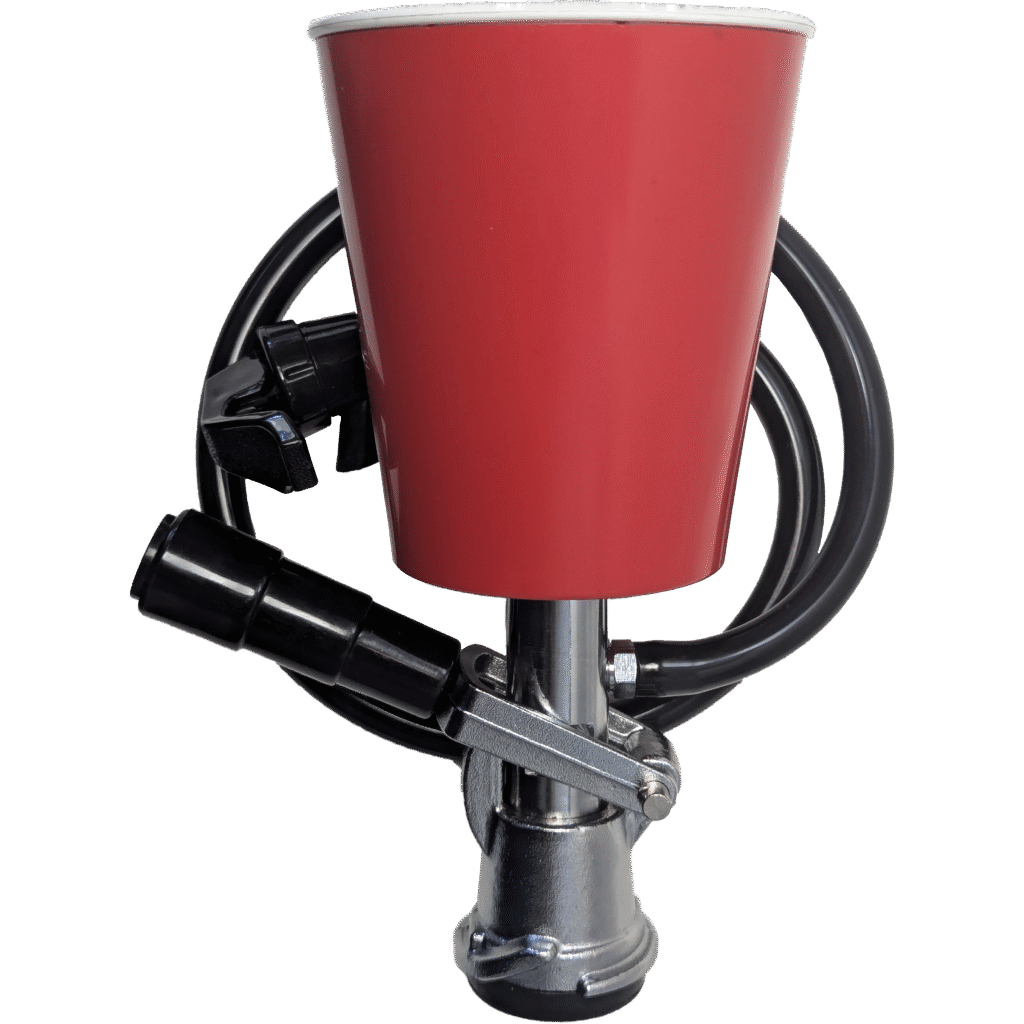
The Kegr — Electronic Keg Tap
Automatic pressure. No hand pumping. No CO2. Bluetooth app monitoring. Free shipping on all US orders.
$239.99$199.99 — Get the Kegr →