
| Quick Answer A kegerator is a dedicated refrigerator that keeps your keg cold and pressurized with CO2 for weeks at a time. A keg tap is a portable device that attaches to a keg for event use. If you want draft beer available at home on an ongoing basis, a kegerator is the right tool. If you need something portable and quick to set up for a party or event where the keg will be finished that day, a modern electronic keg tap like the Kegr is the better choice. |
Choosing between a keg tap and a kegerator comes down to how you plan to use draft beer. Both let you pour from a keg, but they are built for fundamentally different situations and carry very different costs and setup requirements.
What Is a Kegerator?
A kegerator is a refrigerator specifically designed to hold a full-size keg. It has a CO2 tank connected to the keg via a regulator and tap line, keeping the beer cold, pressurized, and fresh for weeks. The keg sits inside the refrigerated cabinet continuously, so you can pour a beer any time without any setup.
Home kegerators range from compact countertop models to full-size freestanding units. A basic home kegerator runs between $300 and $600. Higher-end models with multiple taps can cost over $1,500, plus ongoing CO2 refill costs.
What Is a Keg Tap?
A keg tap is a device that attaches directly to the top of a standard beer keg via a coupler. Traditional hand-pump taps use manual pumping to push air into the keg, building enough pressure to push beer out. You pump a few times before each round of pours.
The Kegr is an electronic keg tap that works the same way as a hand pump but automates the pumping. Instead of manually pumping air into the keg, the Kegr’s battery-powered internal pump maintains pressure automatically so the beer flows consistently without anyone having to pump between pours. Like any air-pump tap, it is designed for events where the keg will be consumed the same day.
Keg Tap vs Kegerator: Head-to-Head Comparison
| Factor | Kegerator | Electronic Keg Tap (Kegr) |
| Upfront cost | $300 to $1,500+ | $199 |
| CO2 required | Yes | No |
| Ice required | No (self-refrigerated) | Yes (keg must be chilled) |
| Portability | Low (stationary appliance) | High (fits in a bag) |
| Setup time | Hours (first-time install) | Under 5 minutes |
| Beer freshness | Weeks (CO2 sealed) | Same day (air pump) |
| Requires power | Outlet (continuous) | Rechargeable battery |
| Best for | Permanent home bar | Parties, events, tailgates |
When a Kegerator Makes More Sense
A kegerator is the right call if:
- You want draft beer available at home continuously, not just for occasional events
- You have a permanent space for a large appliance (kegerators range from 24 to 30 inches wide)
- You want to stretch a keg over weeks without worrying about freshness
- You are comfortable managing CO2 tanks and regulator settings
When an Electronic Keg Tap Makes More Sense
An electronic keg tap like the Kegr is the right call if:
- You are serving beer at a party, tailgate, backyard event, or wedding where the keg will be finished the same day
- You want consistent pressure throughout your event without anyone manually pumping between pours
- You need something portable that travels with you
- You want a low upfront cost with no CO2 equipment to manage
- You want to monitor keg status from your phone via Bluetooth
The Key Difference on Beer Freshness
This is where the two options differ most significantly, and it is worth being direct about it. A kegerator uses CO2 to keep beer sealed and fresh for weeks. A keg tap, including the Kegr, uses air pressure. Air contains oxygen, which begins to oxidize beer and cause it to go flat once it enters the keg. Plan to finish any keg tapped with an air-pump tap the same day you tap it.
The Kegr’s advantage over a traditional hand pump is not freshness duration, it is convenience. You do not have to pump manually between pours, pressure stays consistent throughout the event, and you can monitor everything from your phone. For events where the keg gets finished that day, the Kegr delivers a better experience than a hand pump at a fraction of the cost of a kegerator.
The Bottom Line
If you are setting up a home bar and want draft beer available year-round, invest in a kegerator. If you are hosting a party or event and want the easiest, most convenient keg experience possible without CO2 equipment, the Kegr handles the job cleanly for $199.
Frequently Asked Questions
How much does a kegerator cost?
A basic home kegerator costs between $300 and $600. Commercial-grade or multi-tap kegerators can exceed $1,500. Factor in ongoing CO2 refill costs, which typically run $15 to $35 per tank.
Can I use a keg tap on any keg?
The Kegr is compatible with any standard Sankey D coupler keg, which covers the vast majority of domestic and imported beers available in the United States. Check your keg’s coupler type before purchasing any keg tap.
How long does beer last with a keg tap vs a kegerator?
A kegerator uses CO2, which keeps beer sealed and fresh for weeks. A keg tap including the Kegr uses air, which introduces oxygen into the keg. Beer should be consumed the same day it is tapped with an air-pump tap. If you need multi-day freshness, you need a CO2 system or kegerator.
What is the Kegr?
The Kegr is an electronic smart keg tap that attaches to any standard Sankey D keg. It uses a rechargeable battery-powered pump to automatically maintain air pressure in the keg as beer is dispensed, eliminating the need for manual pumping between pours. It pairs with a companion app via Bluetooth for monitoring keg status and pressure.
Does the Kegr need CO2?
No. The Kegr uses a battery-powered pump to push air into the keg automatically. No CO2 tank, regulator, or gas lines are required.
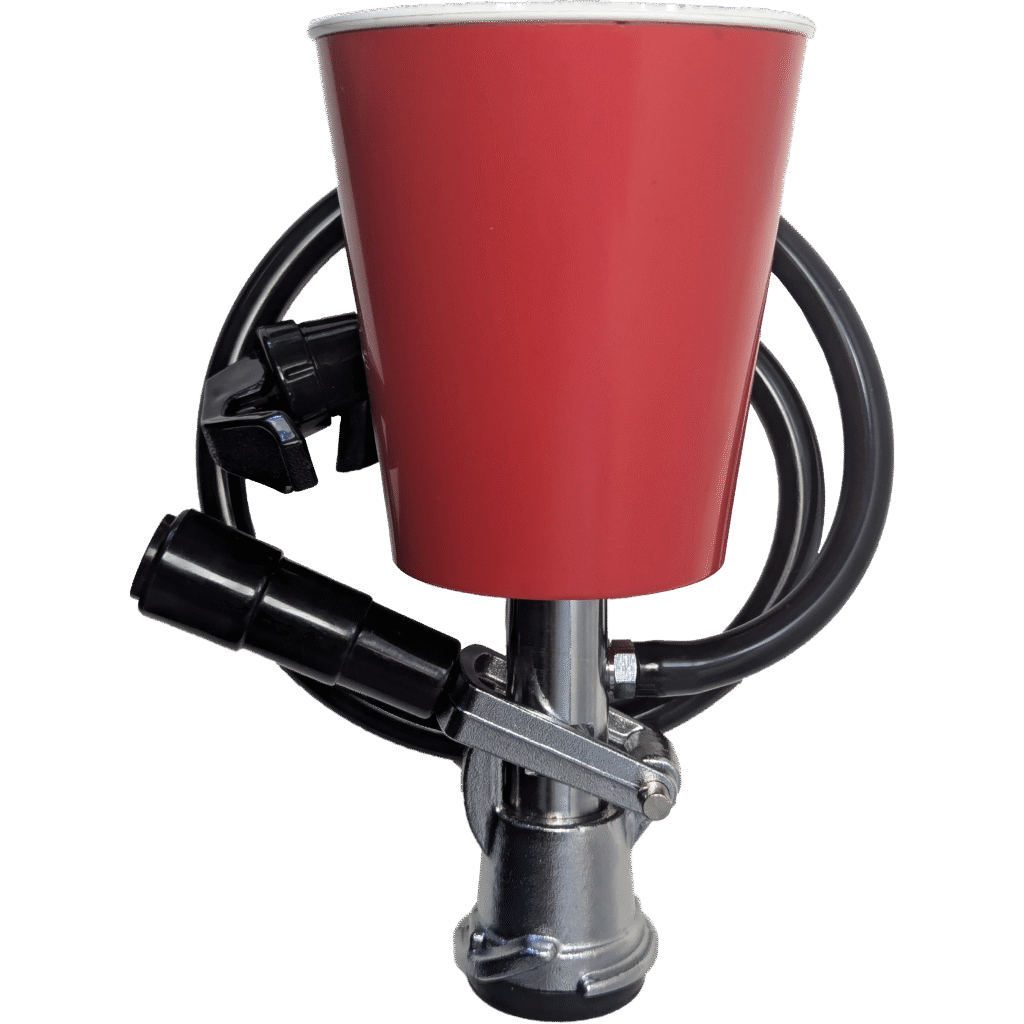
The Kegr — Electronic Keg Tap
Automatic pressure. No hand pumping. No CO2. Bluetooth app monitoring. Free shipping on all US orders.
$239.99$199.99 — Get the Kegr →