
| Quick Answer A manual hand pump is cheaper upfront and works fine for an occasional party, but pressure has to be maintained by hand throughout the event, and pour quality depends on how consistently it is pumped. The Kegr uses a rechargeable battery-powered pump to hold pressure automatically, which means more consistent pours, quieter operation, and no one assigned to pumping duty. It costs more upfront ($199) but is reusable event after event with no CO2, refills, or replacement parts required. |
The classic party pump has been the default way to tap a keg at home for decades. It is inexpensive, simple, and available at nearly any party supply store, but it also means someone has to keep pumping air in by hand throughout the party, and pour quality swings depending on who last pumped it and how many strokes they used. Electronic taps like the Kegr solve the same problem in a fundamentally different way, and the right choice between the two depends on how often you host, how large your events tend to be, and how much you value not thinking about the tap at all.
How Each One Works
A manual hand pump works by physically pumping air into the keg through a check valve, building up pressure that pushes beer up through the tap. Someone has to keep pumping as the party goes on, and pressure control depends entirely on feel, since there is no gauge or readout telling you how much pressure is actually inside the keg at any given moment.
The Kegr replaces that manual effort with a small battery-powered air pump built into the tap itself. It maintains consistent pressure automatically and pairs with a Bluetooth app that shows pressure, keg level, and battery status, so nobody needs to stand there operating it by hand, and anyone checking the app can see exactly what is happening inside the keg without opening the tub.
Head-to-Head Comparison
| Factor | Manual Hand Pump | Kegr |
| Upfront cost | $15 to $40 | $199 |
| CO2 required | No | No |
| Pressure maintenance | Manual, ongoing | Automatic |
| Pour consistency | Depends on pumping habits | Consistent throughout event |
| Monitoring | None | Bluetooth app (pressure, level, battery) |
| Setup time | Under 2 minutes | Under 5 minutes |
| Noise during use | Audible pumping sound each time | Quiet, automatic operation |
| Physical effort required | Ongoing arm effort | None after setup |
| Durability across events | Prone to seal wear, cheap parts break | Reusable, no consumable parts |
| Beer freshness | Same day | Same day |
Pour Quality
Pour quality on a hand pump depends on how consistently it is maintained. Over-pump and you get excess foam, under-pump and the pour comes out flat and slow. This becomes more noticeable at larger parties where multiple people take turns pumping, since everyone has a slightly different sense of how many strokes are enough, and pressure tends to drift up over the course of an event as people err on the side of extra pumps rather than risk a weak pour.
Because the Kegr regulates pressure automatically instead of relying on someone’s arm, pours tend to stay more consistent from the first cup to the last, regardless of how many different people are pouring or how long the party runs.
Noise and the Overall Experience
This is a smaller factor but a real one for a lot of hosts. A hand pump makes an audible hissing or squeaking sound with each stroke, which is fine at a loud backyard party but can feel out of place at a quieter gathering, a wedding reception, or an event where you want the bar area to feel more like a bar and less like someone working a pump. The Kegr’s automatic operation is effectively silent from a guest’s perspective, since the pumping happens internally on its own schedule rather than as a visible, audible action tied to each pour.
Physical Effort and Accessibility
A hand pump requires someone to physically operate it, which is a minor inconvenience for most adults but can be a genuine barrier for older guests, anyone with hand or wrist mobility issues, or simply whoever gets stuck as the unofficial designated pumper for a multi-hour event. Because the Kegr handles pressure automatically, anyone can pour a beer without needing to operate any mechanism beyond pulling the tap handle itself.
Cost Over Time
| Worth noting. A hand pump is the cheaper single-purchase option, but it is also the item most likely to get lost, broken, or left behind between parties, and cheap plastic pumps commonly develop seal issues after repeated use that lead to slow leaks and inconsistent pressure. The Kegr’s higher upfront cost is a one-time purchase that is reusable for every future event with no ongoing gas, refill, or replacement part costs. |
For someone hosting a single party a year, the cost difference may not matter much either way. For anyone hosting several events annually, tailgates, birthdays, holiday parties, the Kegr’s cost evens out fairly quickly against replacing a worn-out hand pump every season or two.
Setting Up Each One, Step by Step
Manual Hand Pump
- Align the coupler with the keg valve and press down firmly
- Turn the locking handle, typically a quarter turn, until it clicks into place
- Pump the handle several times to build initial pressure, usually 8 to 12 strokes to start
- Pour a test cup, then pump again as needed between rounds of pours
Kegr
- Confirm the unit is charged, ideally the night before the event
- Align the coupler tabs with the keg valve slots and press down
- Turn clockwise until locked, then power on
- Wait about 30 seconds for the pump to build initial pressure automatically, then pour a test cup
- Open the companion app to confirm pressure, keg level, and battery status if desired
Both processes take only a few minutes, and the physical coupler attachment step, aligning, pressing, and locking, is identical either way since both use the same standard Sankey D coupler. The real difference shows up after this initial setup: a hand pump needs to be revisited by hand throughout the event, while the Kegr manages pressure on its own from this point forward.
Multi-Keg Events: Does the Difference Compound?
At a single-keg backyard party, the gap between a hand pump and an electronic tap is real but manageable, someone pumps occasionally, and it is a minor inconvenience at worst. At a larger event running two or three kegs at once, a tailgate, a wedding, a block party, that gap widens considerably. Each hand-pumped keg needs its own attention throughout the day, and it is common for one keg to get pumped consistently while another, further from the main crowd, gets neglected and starts pouring flat because nobody has walked over to check it.
With multiple Kegr taps, each one manages its own pressure automatically and reports status to the same app, so a single person can glance at their phone and see all kegs at once rather than physically walking the site checking each one by feel. For event organizers running several kegs across a large space, this difference in oversight tends to matter more than the per-unit cost difference. It is worth thinking through before an event, not during it, since retrofitting a monitoring plan mid-party when a keg has already gone quietly flat is far less useful than knowing ahead of time which approach fits how the event is laid out.
Common Failure Points
| Tap Type | Common Issue | What It Looks Like |
| Hand pump | Worn check valve or seal | Pressure leaks out between pumps, requiring more frequent pumping over time |
| Hand pump | Cracked plastic housing | Common after being dropped or stored improperly between uses |
| Hand pump | Inconsistent operator technique | Pour quality varies depending on who last pumped it |
| Kegr | Low battery late in a long event | Charge before the event and monitor battery status in the app |
| Kegr | Coupler not fully seated | Same fix as any Sankey D tap, press straight down and confirm the lock |
Hand pumps are mechanically simple, which is part of their appeal, but that simplicity also means there is very little standing between normal wear and a pump that no longer holds pressure reliably. A $20 pump that needs replacing every season or two is a real, if easy to overlook, ongoing cost.
Matching the Tap to the Event
The right choice is not always the same answer twice. A casual backyard gathering where the tap is half the entertainment, people enjoy pumping it themselves, might actually be a place where a hand pump’s hands-on nature is part of the fun. A wedding reception, a catered event, or anything where the goal is for the bar setup to disappear into the background rather than draw attention to itself is a better fit for the Kegr’s quiet, automatic operation.
- Casual backyard party with an engaged crowd: either works, hand pump is a lower-cost option that some hosts prefer for the interactive feel
- Wedding, dinner party, or formal event: Kegr, for quiet operation and a cleaner-looking station
- Tailgate or multi-keg event: Kegr, for remote monitoring across multiple kegs without physically checking each one
- Frequent hosting, multiple events per year: Kegr, since the cost evens out against replacing worn hand pumps repeatedly
- One-off party on a tight budget: hand pump, for the lowest possible upfront cost
What Happens If Something Goes Wrong Mid-Event
With a hand pump, a failure usually means a cracked housing or a seal that has finally given out, and the practical fix at a party is simply swapping in a spare if you have one, since a broken hand pump is not something most hosts can repair on the spot. This is part of why experienced hosts who rely on hand pumps often keep a backup on hand for anything beyond a small gathering.
With the Kegr, the most common mid-event issue is a battery running low on an unusually long event, which the app flags ahead of time so it can be swapped or charged before it becomes a problem rather than failing unexpectedly. Neither tap is likely to fail outright during normal use, but knowing what a realistic failure looks like for each helps set expectations rather than assuming either option is entirely worry-free.
Total Cost Over Several Years
A single hand pump purchase looks cheaper than the Kegr on paper, but that comparison only holds if the pump lasts. In practice, a budget hand pump used across several parties a year often needs replacing within a couple of seasons as seals wear and plastic components crack, meaning the real multi-year cost of relying on hand pumps is the pump price multiplied by however many times it gets replaced, plus the inconvenience of a pump failing mid-event. The Kegr’s $199 cost is a single purchase with no consumable parts to replace, which changes the calculation considerably for anyone who expects to host more than a couple of times.
Which One Fits Your Situation
- Choose a hand pump if you host one or two casual parties a year and want the lowest possible upfront cost
- Choose the Kegr if you host regularly, want consistent pours without assigning someone to the pump, or are serving a crowd that includes guests who may not want to operate a pump themselves
- Choose the Kegr for quieter or more formal events, weddings, dinner parties, where the sound and visual of a hand pump feels out of place
- Choose the Kegr if you want to monitor keg status remotely rather than physically checking the tub throughout the event
- Choose the Kegr for any event running more than one keg at a time, where remote monitoring saves real effort
Frequently Asked Questions
Is an electronic keg tap better than a hand pump?
It depends on what you value. A hand pump is cheaper and simple enough for an occasional one-off party. An electronic tap like the Kegr is better suited to anyone who hosts often, wants consistent pours without babysitting the pump, or wants to skip the arm workout during a long event.
Do you still need CO2 with the Kegr?
No. The Kegr uses a battery-powered air pump rather than a CO2 canister or a manual hand pump, so there is nothing to refill or pump by hand during the event.
Which one keeps beer fresher longer?
Neither. Freshness after tapping is about oxygen exposure and how long the keg sits once opened, which applies to any air-pump tapping method, hand pump or electronic. Whichever tap you use, plan to finish the keg the same day.
Can a hand pump over-pressurize a keg more easily than the Kegr?
Yes. Because a hand pump has no pressure readout, it is easy for multiple people at a party to over-pump it without realizing enough pressure was already built up. The Kegr’s app shows the actual pressure reading, which removes that guesswork.
How long does the Kegr’s battery last per event?
Battery life is designed to cover a typical single-day event on one charge, with the app showing remaining battery status throughout. For multi-day events, charging it overnight between uses via USB-C keeps it ready for the next day.
Is a hand pump loud?
It is noticeably audible, a hissing or squeaking sound with each stroke, which most people do not notice at a loud backyard party but can feel out of place at a quieter or more formal event.
Do hand pumps wear out?
Yes, especially cheaper plastic models, which commonly develop seal issues after repeated use that lead to slow pressure leaks and inconsistent pours. This is one of the ongoing costs of a hand pump that is easy to overlook when comparing the upfront price alone.
Can more than one person use the Kegr’s app during an event?
The app is designed to be checked by whoever has the paired phone on hand, so a host, coordinator, or family member can monitor pressure and keg level without needing to be the one who set it up initially.
Is it harder to manage multiple kegs with a hand pump than with the Kegr?
Yes, generally. Each hand-pumped keg needs someone to physically check and pump it throughout the event, and it is common for a keg further from the main crowd to be neglected. Multiple Kegr taps report status to the same app, so one person can monitor all of them without walking the site.
How much does it cost to keep replacing a hand pump over several years of hosting?
It varies by how often you host and the quality of the pump, but budget hand pumps commonly need replacing every season or two as seals wear out. For frequent hosts, this ongoing replacement cost can approach or exceed the one-time cost of an electronic tap over a few years.
Does weather affect a hand pump differently than the Kegr?
The mechanisms themselves are not weather sensitive in normal outdoor conditions. Cold weather can make plastic pump components slightly more brittle over time, while the Kegr’s battery performance can dip modestly in very cold temperatures, similar to any rechargeable battery. Neither is a major practical concern for typical seasonal outdoor events.
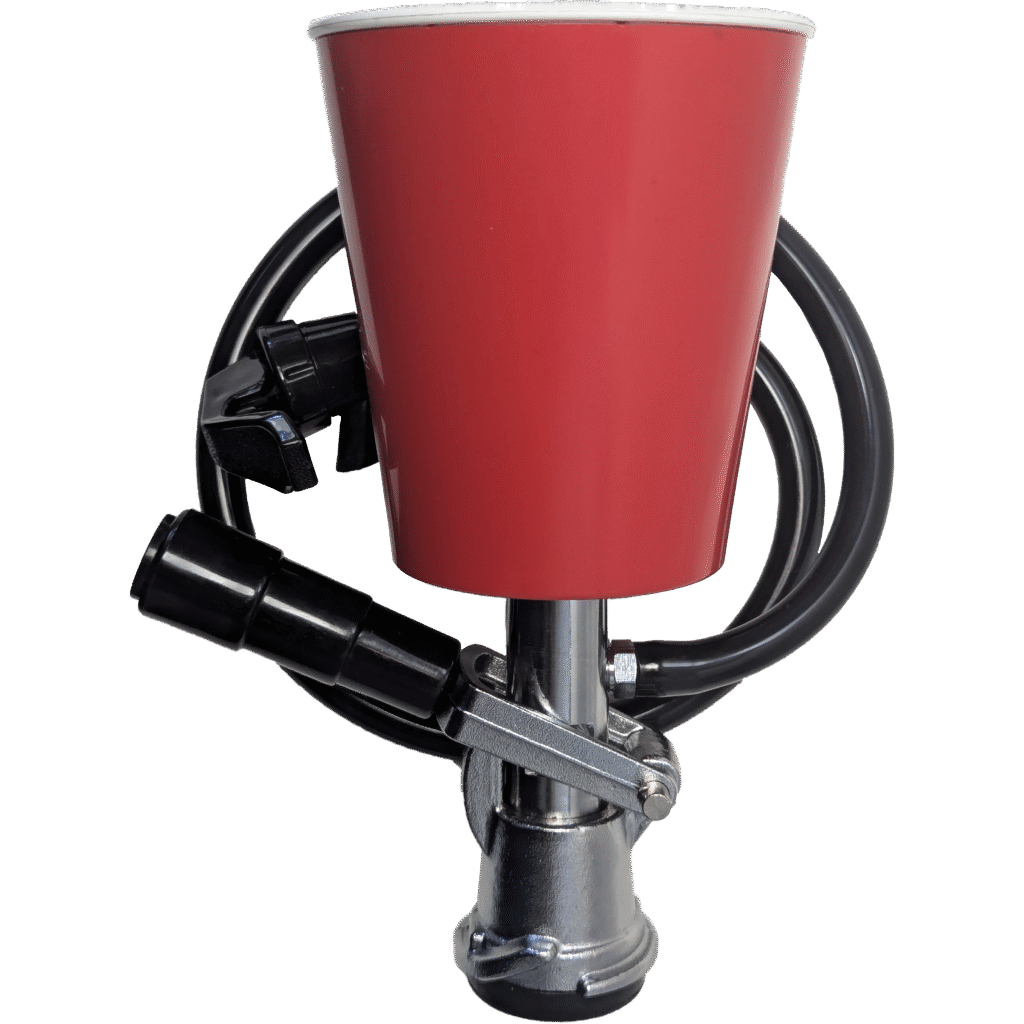
The Kegr — Electronic Keg Tap
Automatic pressure. No hand pumping. No CO2. Bluetooth app monitoring. Free shipping on all US orders.
$239.99$199.99 — Get the Kegr →