
| Quick Answer In hot weather, pack the keg tub with more ice than you think you need, a 50/50 ice and water mix works best, set up in shade, and check ice levels every 2 to 3 hours rather than every 4 to 6. If pours start coming out mostly foam, check ice and temperature first before assuming a pressure problem, since heat is the most common cause of foaming at outdoor summer events. |
A keg behaves differently in ninety-degree heat than it does on a mild spring afternoon. Warm beer foams more, goes flat faster, and puts more pressure on your ice supply than most hosts expect the first time they try a summer keg party. None of that means you should skip draft beer at a hot weather event, it just means the setup needs a few real adjustments rather than the same routine you would use in October.
Why Heat Affects Beer So Much
Carbon dioxide dissolves in liquid more readily at cold temperatures than warm ones. As beer warms, dissolved CO2 wants to escape the liquid more aggressively, which is exactly what happens when a warm beer is poured and produces an oversized head of foam. This is a basic property of carbonated liquids, the same reason a warm soda fizzes over more dramatically than a cold one when opened, and it applies just as much to a keg as it does to a can.
Beyond foaming, warmth also accelerates the same oxidation chemistry that flattens tapped beer over time, meaning a keg sitting warm loses freshness faster than one kept properly cold, on top of pouring worse in the moment.
Get the Ice Ratio Right
In hot weather, plan for more ice than a mild-weather setup, packed as a 50/50 ice and water mix rather than ice alone, since the water fills the gaps between cubes and conducts cold more evenly against the keg.
| Keg Size | Ice to Start (Hot Weather) | Replenish Every 2 to 3 Hours |
| Half-barrel | 50 to 70 lbs | 20 to 25 lbs |
| Quarter-barrel | 25 to 35 lbs | 12 to 18 lbs |
Block ice melts slower than cubed ice and holds a lower temperature longer, which makes it a good base layer in extreme heat, with cubed ice packed around it to fill gaps and cool quickly. See our full comparison of block ice versus cubed ice for more on which combination works best.
Set Up in the Shade
Direct sunlight on the keg tub is one of the fastest ways to burn through ice. A metal keg in direct sun absorbs heat quickly, and even a well-packed tub can start warming from the inside out if it sits in full sun for several hours. Even a simple pop-up canopy or a spot under a tree makes a real difference in how long your ice lasts and how cold the beer stays through the afternoon.
If shade is genuinely unavailable, an insulated keg cooler or a reflective cover draped over the tub can reduce some of the heat gain, though neither fully replaces the difference actual shade makes.
Dry Heat Versus Humid Heat
Not all hot weather behaves the same way for ice management. In dry heat, common in desert or high-altitude climates, ice tends to melt faster due to evaporative cooling pulling heat from the ice surface even before ambient temperature alone would explain it. In humid heat, ice melts somewhat more slowly in relative terms, but the overall discomfort and beer consumption rate at the party often goes up, which means faster keg turnover regardless of ice performance. Practically, this means dry heat climates should lean toward the higher end of the ice ranges above, while humid climates should focus more on shade and airflow around the tub.
How Often to Replenish
| Check more often than you think. In hot weather, check ice levels about every 2 to 3 hours rather than waiting until the tub feels warm. Once ice fully melts into water, add fresh ice rather than draining entirely, since the ice water itself helps hold temperature. |
Signs Your Keg Is Warming Too Fast
- Pours coming out mostly foam even with correct pouring technique
- Beer that tastes noticeably flatter or less carbonated than earlier in the event
- The keg body feeling warm to the touch above the ice line
- A sudden increase in foam complaints after a period without any tap issues
If any of these show up, stop pouring, top off the ice, and wait 20 to 30 minutes before trying again. Temperature is almost always the cause before pressure is, and chasing a pressure fix when the real problem is heat just wastes beer without solving anything.
Choosing a Location Beyond Just Shade
Shade is the biggest factor, but it is not the only one. Setting the keg tub directly on asphalt or dark concrete puts it on top of a surface that can run 20 to 40 degrees hotter than ambient air temperature on a sunny day, radiating heat up into the bottom of the tub. Where possible, set the tub on grass, a table, or even a folding platform rather than directly on hot pavement, and away from any exhaust vents, grills, or other heat sources nearby.
Airflow matters too. A tub tucked into a fully enclosed space with no breeze holds heat differently than one in an open, shaded area with air moving through. If you have a choice between two shaded spots, the one with better airflow is usually the better pick.
Ice Math for a Full-Day Event
For an event that runs a full day rather than a few hours, hot weather ice needs add up faster than most first-time hosts expect. Take an eight-hour outdoor event in 90-degree heat with a half-barrel keg as an example. Starting with 60 pounds of ice and replenishing roughly 22 pounds every 2 to 3 hours means a realistic total of somewhere around 130 to 150 pounds of ice across the full day, not counting any ice used for drink coolers or separate beverage tubs.
Planning for this upfront, buying ice in bulk in advance or identifying a nearby store for a midday run, avoids the common failure mode where a host budgets for a four-hour party’s worth of ice and then scrambles when the event runs long. It is a small amount of extra planning that eliminates one of the most common ways a summer keg party goes sideways.
Planning Around Your Local Climate
Hosts in consistently hot regions, the Southwest, the Gulf Coast, parts of the Southeast through summer, tend to build ice management into their routine without thinking much about it, since every outdoor event assumes serious heat. The more common mistake happens with hosts in typically milder climates who get an unexpected heat wave for a specific event, a hot early-fall wedding, an unseasonably warm spring party, and plan ice quantities based on their usual mild-weather experience rather than the actual forecast for that day. Checking the forecast specifically for your event date, rather than going on general seasonal assumptions, is worth the two minutes it takes, especially for any outdoor event booked weeks or months in advance.
This matters just as much for events scheduled in what is technically the shoulder season, late spring or early fall, as it does for the height of summer. A single unseasonably hot day in a normally mild month catches more hosts off guard than a predictably hot July afternoon does, simply because nobody thought to plan for it. If your event date is more than a week out when you are first budgeting ice, treat your initial plan as a rough estimate and revisit it once a more reliable short-range forecast is available.
Insulated Coolers in Extreme Heat
A standard plastic or galvanized keg tub works fine for most events, but in extended extreme heat, above 95 degrees or for events running longer than six hours in direct sun, an insulated keg cooler earns its cost more clearly. The added insulation between the keg and the outer wall meaningfully slows heat transfer compared to a standard uninsulated tub, which translates into less ice needed and a more stable temperature over a long day. For anyone who regularly hosts outdoor summer events, this is one of the more worthwhile upgrades to consider, alongside the tap itself.
What to Do If You Run Out of Ice Mid-Event
Even with good planning, ice sometimes runs short faster than expected, whether from a hotter-than-forecast day or a larger crowd than anticipated. If this happens, the priority order is: stop pouring from the keg temporarily if pours have become mostly foam, source more ice as quickly as possible, from a nearby store, a neighbor, or a gas station, and in the meantime move the tub into whatever shade is available to slow further warming while you wait.
Having a backup plan identified in advance, the nearest store that sells bagged ice and its hours, makes this a minor hiccup rather than a party-derailing problem. This is worth checking before the event for any outdoor gathering expected to run more than four or five hours.
Pacing and Guest Comfort in the Heat
Hot weather events tend to see faster and heavier drinking early in the day as guests arrive thirsty and look for something cold, which is worth factoring into both your ice planning and your overall beverage setup. Having water readily available alongside the keg, not as an afterthought but genuinely accessible at the same station, helps guests pace themselves through a long hot day and is simply good hosting practice for any outdoor summer event.
Does the Type of Tap Matter in Heat?
The tap mechanism itself, whether a hand pump, CO2 system, or an electronic pump like the Kegr, does not change how the beer responds to heat. All three push beer through the same basic path, and warm beer will foam regardless of what is generating the pressure. Where the tap type matters slightly is convenience during a long, hot event: a hand pump requires someone to keep manually pumping in conditions where standing over a hot keg tub is unpleasant, while an automatic tap maintains pressure without anyone needing to be physically present at the station.
Frequently Asked Questions
How long does keg ice last in hot weather?
In direct heat above 85 degrees, a well-packed tub of ice around a keg typically lasts 2 to 3 hours before needing a top off, less in direct sun. Shade and block ice both extend that window.
Does hot weather affect how a keg tap performs?
The tap mechanism itself is not affected by temperature, but the beer is. Warmer beer foams more easily and loses carbonation faster once poured, which is why keeping the keg cold matters more in hot weather than which tap you are using.
Should you tap a keg later in the day when it is hot?
If possible, yes. Tapping closer to when guests will actually be drinking, rather than early in the morning before a hot afternoon, reduces the total time the beer spends losing freshness in the heat.
Does the Kegr behave differently in hot weather than a hand pump?
The pump mechanism itself works the same regardless of temperature, but like any tap, it cannot compensate for a keg that has warmed up. Keeping the keg iced properly matters just as much with the Kegr as with a manual pump.
Why does beer foam more in hot weather even with the right pressure?
Carbon dioxide escapes warm liquid more aggressively than cold liquid, which is a basic property of carbonation, not a pressure problem. Even a keg at correct pressure will foam more when the beer itself is warm.
Does dry heat or humid heat melt ice faster?
Dry heat tends to melt ice somewhat faster due to evaporative cooling effects, though both climates require more ice management than mild weather. Humid heat often drives faster beer consumption at the party itself, which changes keg turnover even if ice technically lasts a bit longer.
Can you use dry ice instead of regular ice for a keg in extreme heat?
It is not recommended. Dry ice is far colder than needed and can freeze beer near the keg wall, causing inconsistent flow and potential damage to the keg valve. Standard bagged water ice, ideally combined with block ice, is the safer choice even in extreme heat, and it is also far more widely available on short notice if you need to restock mid-event.
Does setting the keg tub on pavement make a difference?
Yes. Dark asphalt or concrete can run significantly hotter than the surrounding air on a sunny day and radiates that heat into the bottom of the tub. Setting the tub on grass, a table, or a platform rather than directly on hot pavement helps it hold temperature longer.
How much ice do I need for a full-day hot weather event?
For an eight-hour event in 90-degree heat with a half-barrel, budget somewhere around 130 to 150 pounds of ice total across the day, not just the initial fill. Buying in bulk ahead of time or planning a midday ice run avoids running short late in the event.
What should I do if I run out of ice during a hot weather party?
Stop pouring temporarily if the keg has started producing mostly foam, get more ice as quickly as possible, and move the tub into any available shade in the meantime to slow further warming. Identifying a nearby store that sells ice before the event makes this a quick fix rather than a scramble.
Should I have water available alongside the keg on a hot day?
Yes, it is worth making water genuinely accessible at the same station rather than an afterthought, since hot weather events tend to see heavier early drinking as guests arrive thirsty, and having water on hand helps everyone pace themselves through a long day.
How far in advance should I check the weather forecast for an outdoor keg event?
Check the specific forecast for your event date within the week leading up to it, rather than relying on general seasonal assumptions. This is especially important for events booked weeks or months ahead in typically mild climates, where an unexpected heat wave can catch hosts off guard on ice planning.
Does keg size change how much ice I need in hot weather?
Yes, roughly proportionally. A half-barrel needs meaningfully more ice than a quarter-barrel to stay properly cold in the same conditions, since there is more liquid volume to keep at temperature. See our sizing table above for starting quantities by keg size in hot weather.
Is an insulated keg cooler worth buying for just one hot weather event?
For a single event, a standard tub with generous ice is usually sufficient and more cost-effective. An insulated cooler starts to make more sense for anyone who expects to host multiple outdoor summer events, since the reduced ice consumption and more stable temperature pay off across repeated use rather than a single afternoon.
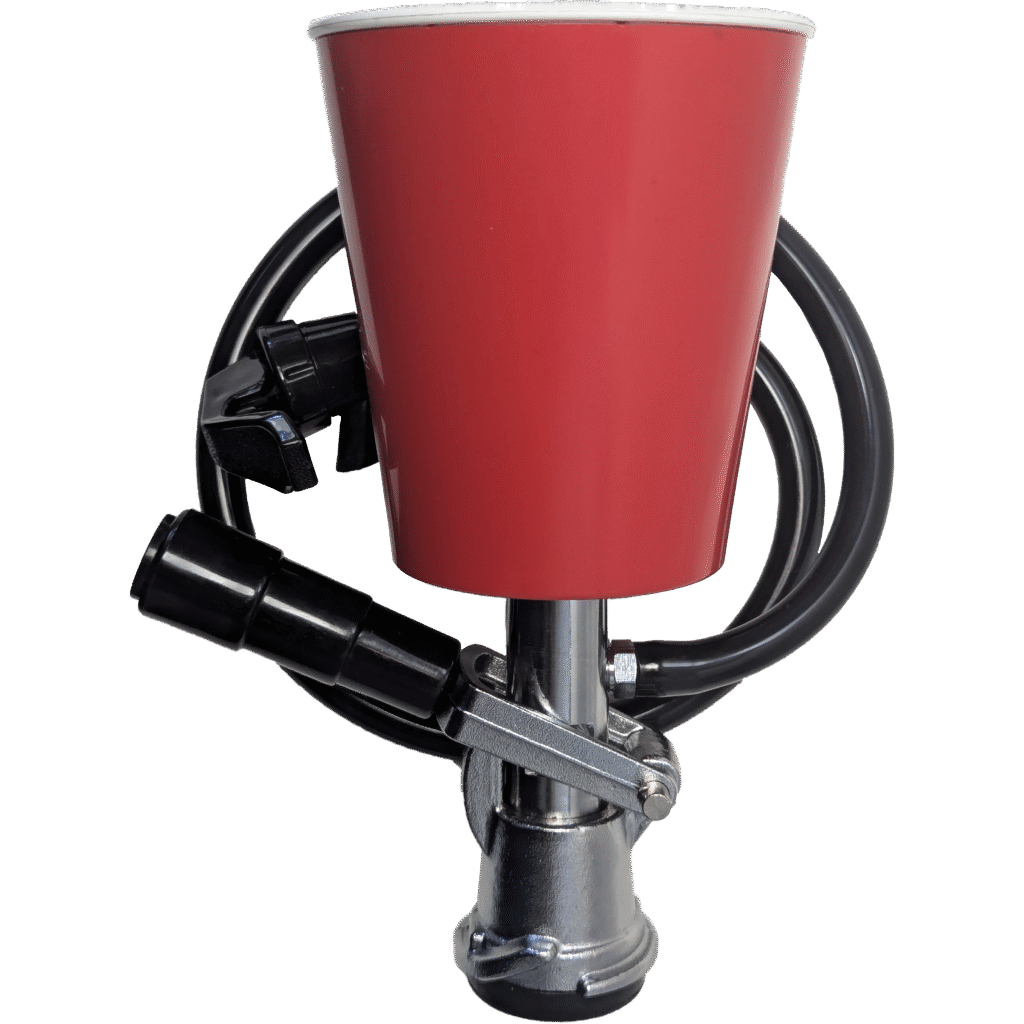
The Kegr — Electronic Keg Tap
Automatic pressure. No hand pumping. No CO2. Bluetooth app monitoring. Free shipping on all US orders.
$239.99$199.99 — Get the Kegr →