
| Quick Answer A quarter-barrel (about 82 12-ounce servings, 87 lbs full) fits smaller gatherings under 50 guests and is manageable for one person to lift. A half-barrel (about 165 servings, 160 lbs full) offers a better price per serving and fits larger, beer-focused parties over 100 guests, but needs a hand truck or two people to move. Guest count, storage space, and how much lifting help you have all factor into the right choice. |
Once you have decided to serve draft beer, the next question is which keg size makes sense. The two most common options for home events are the quarter-barrel and the half-barrel, and the right choice mostly comes down to guest count, budget, how much weight you are prepared to move, and how much space you actually have to store and ice the thing down.
Size, Weight, and Serving Count
| Spec | Quarter-Barrel | Half-Barrel |
| Volume | 7.75 gallons | 15.5 gallons |
| 12 oz servings | ~82 | ~165 |
| 16 oz pints | ~62 | ~124 |
| Weight full | ~87 lbs | ~160 lbs |
| Weight empty | ~21 lbs | ~30 lbs |
| Approximate diameter | Fits most standard tubs and car trunks | Requires a larger tub, harder to transport in a sedan |
Weight and Handling
A full half-barrel at around 160 pounds is not a one-person lift. A hand truck rated for at least 200 pounds is the safer, easier way to load, unload, and position it. A full quarter-barrel at around 87 pounds is manageable for one reasonably strong person, though a dolly still makes it easier, especially over any real distance or up and down stairs.
This matters more than it might seem for anyone hosting solo, without a second person to help load and unload, or anyone working with a smaller vehicle where fitting a half-barrel keg tub in the trunk is a genuine challenge. For a full breakdown of exact weights across every common keg size, see our guide on how much a full keg weighs.
Price Per Serving
Half-barrels typically offer a better price per serving than quarter-barrels of the same beer, since you are buying more volume in one container. For a larger, beer-focused party, that makes the half-barrel the more economical choice. For a smaller gathering, the savings are often not worth paying for beer you will not finish, especially since any keg tapped with an air-pump tap should be finished the same day.
A Worked Example
Imagine two households each planning a party. Household A expects 30 guests at a casual backyard gathering. Household B expects 140 guests at a larger outdoor celebration. Household A ordering a half-barrel to save a bit per serving would likely end up with 80 or more servings unfinished at the end of the night, beer that has already been tapped and is losing freshness by the hour. Household B ordering a single quarter-barrel would run out well before the party winds down and need at least one more keg run mid-event. Matching keg size to guest count, rather than defaulting to whichever seems like the better per-serving deal, avoids both outcomes.
Storage and Refrigeration Space
A half-barrel needs meaningfully more refrigerator or ice bath space than a quarter-barrel, both because of its larger diameter and taller height. If you are planning to pre-chill in a home refrigerator rather than an ice bath, measure your available space before ordering, since a standard half-barrel often will not fit in a typical kitchen refrigerator at all and requires either a large standalone unit, a walk-in cooler, or an extended ice bath chilling period instead.
One Large Keg or Two Smaller Ones for Variety
For events where variety matters, offering a lager alongside an IPA, for example, two quarter-barrels of different styles can be a better fit than one half-barrel of a single beer, even at a similar total serving count. This does mean managing two taps and two ice setups rather than one, so it is worth weighing the added logistics against the benefit of choice for your particular guest list.
| Sizing tip. If your guest count math lands between the two sizes, round down rather than up. It is easier to run a case of canned beer as backup than to finish an oversized keg the same day it is tapped. |
How Serving Style Changes the Decision
A staffed, bartended setup where someone is actively managing the pour tends to work fine with either size, since the person pouring naturally paces consumption and keeps an eye on how much is left. A self-serve setup, where guests pour their own, tends to move through beer faster and less predictably, since there is no one moderating pour sizes or pacing. If you are going self-serve, it is worth sizing slightly more conservatively than the standard guest-count formula suggests, since self-service events commonly see higher consumption than staffed ones due to larger, more casual pours.
Renting Tap Equipment for Two Kegs at Once
If you decide two quarter-barrels of different styles makes more sense than one half-barrel, remember that means sourcing two taps, not just two kegs. Renting a second hand pump for the day is usually inexpensive and widely available at the same place you are ordering the kegs. If you already own a Kegr, using it on your primary keg and pairing it with a rented or borrowed hand pump for the second is a reasonable way to manage two kegs without buying a second electronic tap, since the secondary keg with the less critical style can reasonably use the simpler option.
Return Logistics and Deposits
Both sizes typically involve a refundable deposit on top of the beer cost, returned when you bring the empty keg back within the retailer’s window, commonly a few days to a couple of weeks depending on the store. Size does not usually change the deposit structure itself, but it does change the practical logistics of the return trip: a half-barrel needs the same hand truck or second person for the return as it did for pickup, while a quarter-barrel is easy enough to toss in a trunk solo. If you ordered two quarter-barrels instead of one half-barrel for variety, remember that means two separate returns rather than one, which is a minor but real added errand.
Avoiding Waste
Because any keg tapped with an air-pump tap should be finished the same day for the best quality, oversizing has a real cost beyond money spent, unfinished beer that has already been tapped and is declining in freshness with no good way to use it up. This is part of why rounding down when your guest count math falls between sizes tends to be the better call. A slightly-too-small keg backed up with a case of canned beer produces very little waste. A slightly-too-large keg often means pouring out beer at the end of the night that nobody was going to drink, which is a worse outcome for both your budget and the beer that gets wasted.
Two More Worked Examples
The Backyard Birthday Party
A host is planning a fortieth birthday party for 35 guests, running about five hours in the early evening. Estimating that roughly 20 of those guests will drink beer at a moderate pace, one and a half beers per hour on average, works out to about 150 total servings needed, which comfortably fits within a single half-barrel with some room to spare, or two quarter-barrels if the host wants to offer both a lager and an IPA. Given the smaller guest count, two quarter-barrels of different styles is arguably the better choice here, since it avoids an unfinished half-barrel while still giving guests real variety.
The Community Block Party
A neighborhood association is planning a block party expecting 180 attendees across a full afternoon, with beer as one option alongside soft drinks and a taco truck. Estimating conservatively that 100 guests will have a beer or two apiece over the event puts total servings needed somewhere around 180 to 220, comfortably covered by one half-barrel with a second smaller keg, a quarter-barrel or sixtel, as backup rather than risking running out mid-afternoon at a public event where more people may show up than initially RSVPed.
Public and open-invitation events are worth treating differently from private parties with a known guest list. A private party rarely sees significantly more guests than invited, but a block party, a public fundraiser, or any event advertised to a wider community can see turnout swing well above initial estimates. Building in a backup keg, even a small one, is cheap insurance against the specific failure mode of running dry in front of a crowd that includes people who do not know you well enough to shrug it off.
Where a Sixtel Fits Into This Decision
The quarter-barrel and half-barrel are not the only two options. A sixth-barrel, or sixtel, holds about 5.16 gallons and pours roughly 55 servings, smaller than a quarter-barrel and a genuinely good fit for gatherings under 25 guests where even a quarter-barrel would likely go unfinished. Sixtels are also popular for craft beer specifically, since many smaller breweries package in this size rather than the larger formats. If your guest count is small enough that a quarter-barrel still feels oversized, it is worth asking your retailer whether the beer you want is available in a sixtel before defaulting to the next size up.
Which One Fits Your Event
| Event Type | Typical Guest Count | Recommended Size |
| Small backyard gathering | Under 30 | Quarter-barrel or sixtel |
| Standard house party | 30 to 60 | One quarter-barrel, or two for variety |
| Wedding reception | 80 to 150 | One half-barrel, or two quarter-barrels |
| Tailgate or large outdoor event | 100+ | One or more half-barrels |
| Block party or large community event | 150+ | Multiple half-barrels |
Frequently Asked Questions
How many people does a quarter-barrel serve?
A quarter-barrel pours roughly 82 twelve-ounce servings, which comfortably serves 25 to 40 guests over a few hours if beer is the primary drink, or more if it is one option among several.
Is a half-barrel worth it for a small party?
Usually not. A half-barrel makes the most financial sense when you expect to use most of it. For a party under 40 guests, a quarter-barrel is easier to size correctly and avoids paying for beer that gets poured out unfinished.
Do quarter and half-barrels use the same tap?
Yes, in the United States both sizes almost always use a standard Sankey D coupler, so the same tap, including the Kegr, works on either size without any adapter.
How many kegs do I need for my guest count?
It depends on guest count, event length, and how much of your crowd drinks beer. See our full guide on how many kegs you need for a party for a size-by-size breakdown with a simple formula and worked examples.
Can I fit a half-barrel in a regular refrigerator?
Usually not. A standard half-barrel is typically too tall and wide for most home kitchen refrigerators. Plan on a large standalone unit, a walk-in cooler if available, or an extended ice bath chilling period of 4 to 6 hours instead.
Is it better to buy one half-barrel or two quarter-barrels for a big party?
It depends on your priorities. One half-barrel is simpler to manage and typically cheaper per serving. Two quarter-barrels of different styles give guests more variety but require managing two taps and two ice setups.
How much does a full quarter-barrel weigh compared to a half-barrel?
A full quarter-barrel weighs about 87 pounds, versus about 160 pounds for a full half-barrel, nearly double. See our full guide on keg weights by size for empty and full weights across every common keg size.
Does keg size change the deposit or return process?
Not usually. Most retailers apply the same deposit structure regardless of size, refunded when the empty keg is returned within their window. The main difference is logistics, a half-barrel needs a hand truck or second person for the return trip, while a quarter-barrel is manageable solo.
What happens if I order two quarter-barrels instead of one half-barrel?
You get the flexibility of offering two different beer styles, at the cost of managing two taps, two ice setups, and two separate returns instead of one. For events where variety matters to the guest list, many hosts find that tradeoff worthwhile.
Is it better to undersize or oversize a keg order?
Undersizing slightly is generally the safer choice. A case of canned beer as backup covers a shortfall with little waste, while an oversized keg that goes unfinished the same day it is tapped means pouring out beer that has already lost freshness.
Does self-serve versus staffed pouring change how much beer I need?
It can. Self-serve events tend to see larger, less consistent pours and generally move through beer faster than staffed events where someone is moderating pour sizes. Sizing slightly more conservatively for a self-serve setup is a reasonable adjustment.
What is a sixtel and when does it make more sense than a quarter-barrel?
A sixth-barrel, or sixtel, holds about 5.16 gallons and pours roughly 55 servings, smaller than a quarter-barrel. It is a good fit for gatherings under 25 guests, and many craft breweries package specifically in this size.
Do I need two taps if I order two different kegs?
Yes, each keg needs its own tap to pour from simultaneously. If you already own one electronic tap, pairing it with a rented or borrowed hand pump for a second keg is a practical way to manage two kegs without buying a second electronic unit.
What size keg makes sense for a birthday party of 35 guests?
For a moderate five-hour party with around 20 beer drinkers, a single half-barrel comfortably covers it, or two quarter-barrels of different styles if variety matters more than simplicity. See our worked example above for the full math.
How do I plan keg size for a public event where the guest count is uncertain?
Plan conservatively and lean toward a larger primary keg with a smaller backup keg on hand, rather than a single keg sized exactly to your best guess. Public or open-invitation events often see more attendees than initial estimates suggest, and having backup on hand avoids running out mid-event.
Is a quarter-barrel or half-barrel better for a fundraiser or community event?
It depends on expected turnout, but for larger public events, a half-barrel as the primary keg with a smaller backup size covers both steady demand and unexpected turnout better than trying to size a single keg exactly to a rough estimate.
Can I mix a half-barrel and a quarter-barrel at the same event?
Yes, and it is a common approach for larger events wanting both volume and variety. A half-barrel of a crowd-pleasing lager alongside a quarter-barrel of a craft option covers most guest preferences without the cost of two half-barrels, and it gives you a natural fallback if one style runs low before the other.
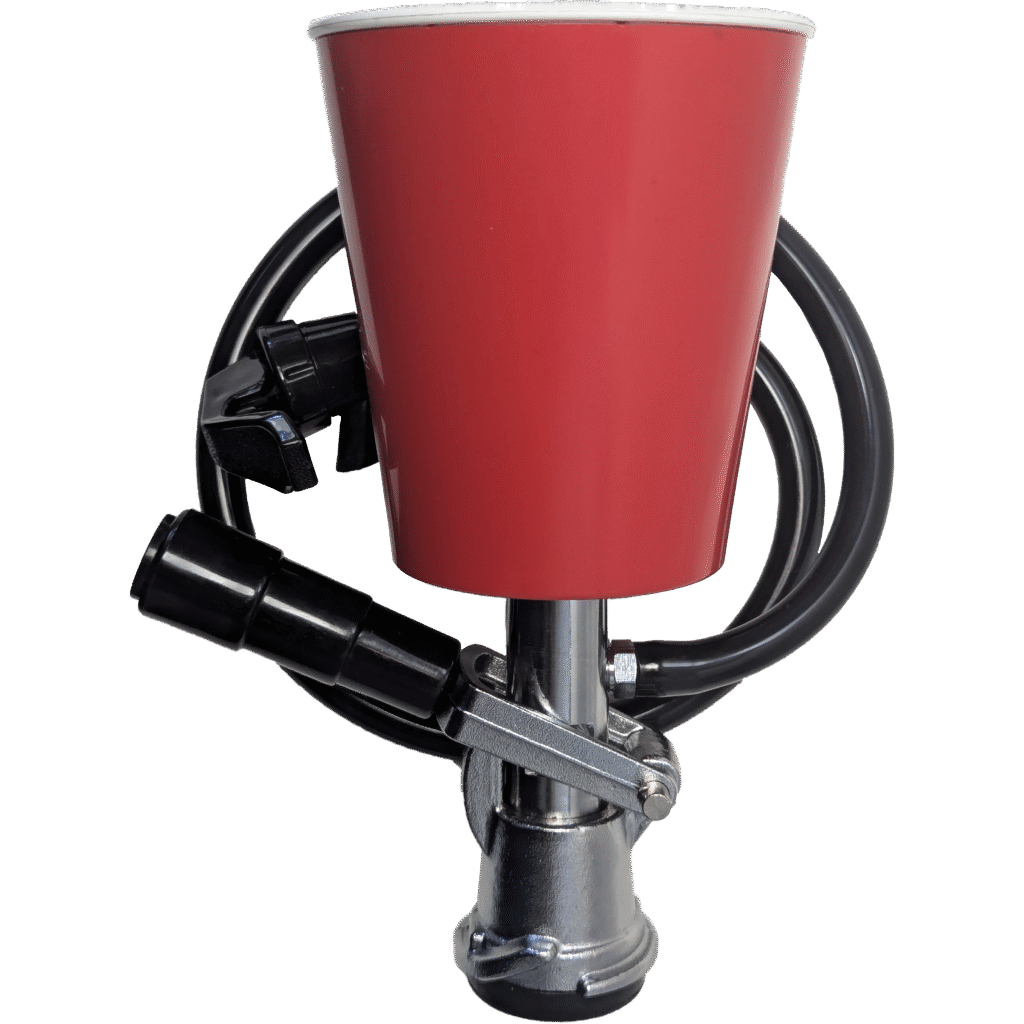
The Kegr — Electronic Keg Tap
Automatic pressure. No hand pumping. No CO2. Bluetooth app monitoring. Free shipping on all US orders.
$239.99$199.99 — Get the Kegr →