
| Quick Answer The most effective way to keep a keg cold at a party is a keg tub filled with a 50/50 mix of ice and water. The water conducts cold more evenly than ice alone. Surround the keg up to its neck, pre-chill it for at least 24 hours beforehand, and replenish ice every 4 to 6 hours. This keeps most kegs at proper serving temperature (36 to 40 degrees Fahrenheit) throughout a full-day event. |
Temperature is one of the biggest variables in pour quality. Beer that is too warm foams excessively and loses carbonation fast. Keeping the keg cold from the moment you pick it up to the last pour of the night is what separates a great event pour from a frustrating one.
Step 1: Pre-Chill the Keg Before the Party
This is the most important step and the one most people skip. A full half-barrel keg contains 15.5 gallons of liquid. That is a lot of thermal mass to bring down to serving temperature, and it takes significantly more time than most people expect.
- Refrigerator method: Place the keg in a walk-in cooler or large upright refrigerator at least 24 to 48 hours before your event. This is the most reliable option.
- Ice bath method: If refrigerator space is not available, place the keg in a keg tub and surround it completely with ice at least 4 to 6 hours before tapping. Effective but uses more ice upfront.
| Do not tap a warm keg. A keg that has not been properly pre-chilled will foam excessively regardless of tap type or pressure. Every pour will be mostly foam until the beer cools down. Pre-chilling is not optional if you want good pours from the first cup. |
Step 2: Choose the Right Keg Tub
A keg tub is a round plastic or galvanized metal tub sized to hold a keg with space for ice on all sides. Key specs to look for:
- Diameter: A half-barrel keg is approximately 16 inches across. Your tub should be at least 20 to 22 inches in diameter to leave room for ice around the sides.
- Height: A full half-barrel stands about 23 inches tall. A tub at least 18 inches deep allows ice to surround the bulk of the keg body.
- Material: Galvanized metal tubs look better at outdoor events. Heavy-duty plastic tubs are lighter and cheaper.
Standard keg tubs are available at party supply stores, homebrew shops, and online for $20 to $60.
Step 3: Use an Ice and Water Mix, Not Ice Alone
Solid ice cubes have air gaps between them that reduce their cooling efficiency. Adding water fills those gaps and creates a continuous conductive medium that transfers cold to the keg much more evenly and effectively.
The right ratio is roughly 50 percent ice and 50 percent water by volume. Add water to the tub first, then pack ice around the keg until the ice water level reaches the neck of the keg. The body of the keg should be submerged in the ice bath up to its shoulder.
How Much Ice Do You Need?
| Keg Size | Tub Size Needed | Ice to Start | Replenishment (per 4 hrs) | Event Coverage |
| Half-barrel (15.5 gal) | 20 to 22 inch diameter | 40 to 60 lbs | 15 to 20 lbs | Full day |
| Quarter-barrel (7.75 gal) | 16 to 18 inch diameter | 20 to 30 lbs | 10 to 15 lbs | Full day |
| Sixth-barrel (5.16 gal) | 14 to 16 inch diameter | 15 to 20 lbs | 8 to 12 lbs | Full day |
These estimates assume outdoor summer conditions around 80 to 90 degrees Fahrenheit. In cooler weather or shade, ice consumption will be noticeably lower.
Keeping the Keg Cold in Direct Sun or Heat
Direct sunlight significantly accelerates ice melt and can warm the top of the keg even when the lower body is well-iced. In hot or sunny conditions:
- Position the keg tub in a shaded spot whenever possible
- Drape a burlap bag, foam keg sleeve, or wet towel over the top of the keg to reduce radiant heat absorption
- Use block ice for the bottom layer of the tub, which melts slower than cubed ice, then top with cubed ice
- Check ice levels every 2 to 3 hours in extreme heat rather than every 4 to 6
Does the Tap Affect Keg Temperature?
The tap itself does not meaningfully change keg temperature. However, if your tap has an extended beer line exposed to heat or direct sun, the beer sitting in that line can warm up. A warm line means the first few ounces of each pour come out warmer and foamier than the beer in the keg itself.
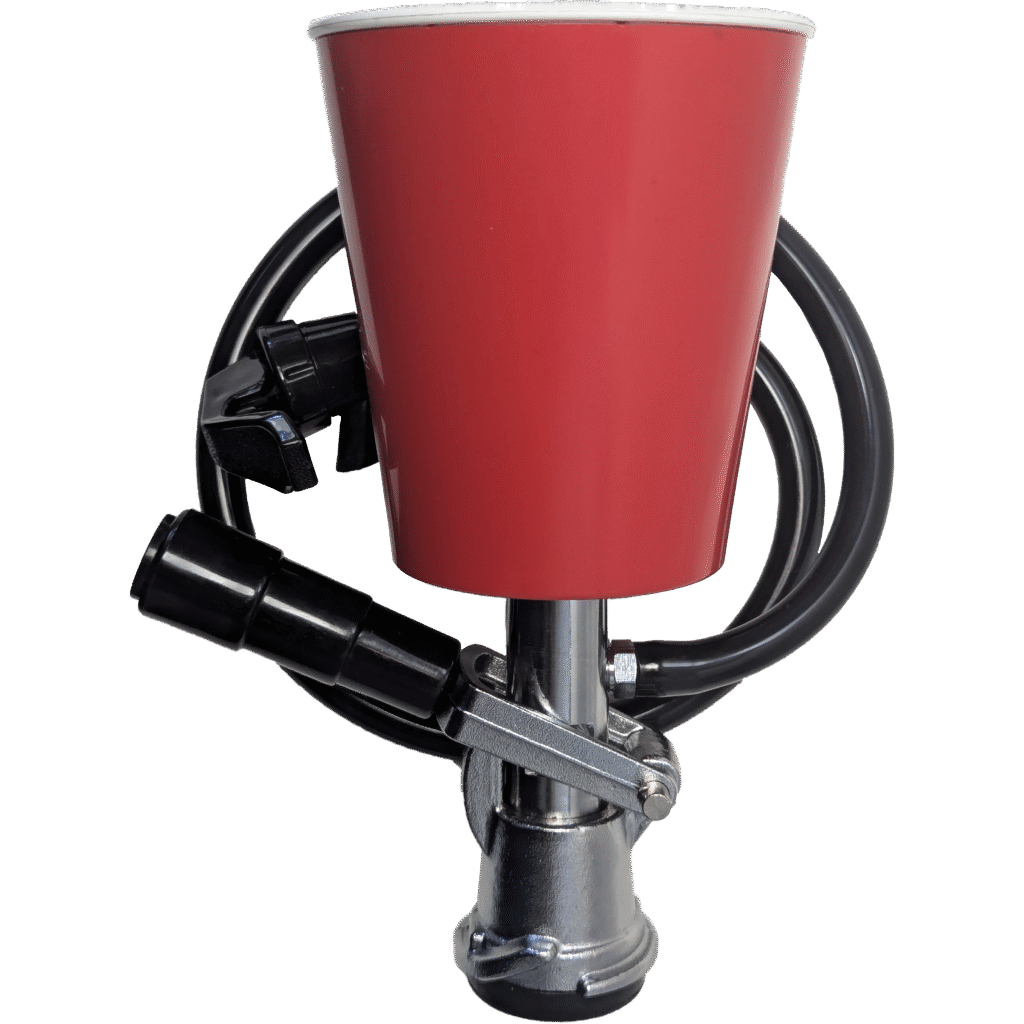
The Kegr sits directly on top of the keg with no extended line, which eliminates this issue. The Bluetooth companion app also lets you monitor keg pressure throughout the event, which is a useful indirect signal that pour conditions are stable.
Signs the Keg Is Getting Too Warm
- Pours are producing more foam than earlier in the event even with good technique
- Beer tastes noticeably flatter or less carbonated than it did at the start
- The keg body feels warm to the touch above the ice line
If any of these signs appear, stop pouring, add fresh ice, and wait 20 to 30 minutes before trying again. Temperature is almost always the cause before pressure is.
What About Insulated Keg Coolers?
Insulated keg coolers are a step up from standard tubs. They are cylindrical coolers designed specifically to hold a keg, with insulation between the keg and the outer wall. They cost $80 to $200 but use significantly less ice and hold temperature more consistently throughout a long event. For anyone who taps kegs regularly at outdoor gatherings, they are worth the investment.
Frequently Asked Questions
How long will a keg stay cold in a tub of ice?
A properly iced keg in a standard tub stays at serving temperature for 4 to 8 hours before needing ice replenishment. In cool weather or shade it lasts longer. An insulated keg cooler can stretch that to 8 to 12 hours between top-ups.
Can I use dry ice to keep a keg cold?
Dry ice is not recommended. It is extremely cold (around minus 109 degrees Fahrenheit) and can freeze the beer near the keg wall, causing inconsistent flow and potentially damaging the keg valve. Stick with regular bagged water ice.
Does the keg need to stay upright?
Yes. Kegs should always be stored and tapped upright. Laying a keg on its side can interfere with the dip tube that draws beer from the bottom of the keg and cause foam problems when tapped.
How cold is too cold for a keg?
Avoid letting the keg drop to 32 degrees Fahrenheit or below. Freezing causes carbonation loss and can damage the keg. The safe serving range for most beers is 36 to 40 degrees Fahrenheit.
Should I chill the keg before or after tapping?
Always chill before tapping. A cold keg gives you good pours from the first cup. If you must tap a warm keg, attach the Kegr but hold off on pouring until the keg has had time to cool down in the ice bath. Warm beer tapped with an air-pump tap will foam badly and the beer quality will decline faster.
The Kegr — Electronic Keg Tap
Automatic pressure. No hand pumping. No CO2. Bluetooth app monitoring. Free shipping on all US orders.
$239.99$199.99 — Get the Kegr →