
| Quick Answer Foamy keg beer is almost always caused by one of three things: the keg is too warm, the keg was recently agitated or transported, or the pour technique is wrong. Fix temperature first — it is the cause in the majority of cases. If the keg is properly cold and settled, look at pour angle and tap pressure next. |
A glass that is half foam is the most frustrating keg problem and the one people try to solve by adjusting the tap when the tap is rarely the issue. The root cause is almost always upstream. Here is how to work through it systematically so you are not wasting beer chasing the wrong fix.
The Most Common Causes of Keg Foam, In Order
1. The Keg Is Too Warm
This is by far the most common cause of excessive foam and the first thing to check. Beer carbonation is dissolved CO2 gas. As beer warms up, that gas wants to escape from solution and form bubbles. Even a keg that is a few degrees above its ideal serving temperature (36 to 40 degrees Fahrenheit) will pour dramatically more foam than a properly cold one.
A keg at 50 degrees will pour mostly foam. A keg at room temperature is essentially unporable until chilled. If you just picked up the keg and are trying to tap it at the event without pre-chilling, this is your problem.
- Fix: Get the keg into an ice bath immediately. Use a 50/50 mix of ice and water, which conducts cold more effectively than ice alone. A full half-barrel keg needs at least 4 to 6 hours in a proper ice bath to reach serving temperature, and 24 to 48 hours in a refrigerator is ideal. Do not pour until the keg is genuinely cold throughout.
2. The Keg Was Recently Transported or Agitated
Shaking, tilting, or bumping a keg during transport agitates the dissolved CO2 in the beer. Once agitated, the gas is unstable and eager to escape the moment pressure is released at the tap. This is why you can have a perfectly cold keg that still pours all foam for the first 20 to 30 minutes after arriving at the party.
- Fix: Let the keg rest upright and undisturbed for at least 1 hour after transport before tapping. Two hours is better if the drive was rough or long. Do not roll the keg into position right before the party and expect good pours immediately.
3. Incorrect Pour Technique
Even a perfectly cold, well-rested keg pours foamy if the technique is wrong. The two most common pour mistakes are opening the tap only partway (which causes turbulence inside the faucet and agitates the beer) and pouring straight down into an upright glass from height (which releases CO2 violently on impact).
- Fix: Open the tap handle fully in one motion. Hold the glass at a 45-degree angle so beer runs down the inside wall of the glass rather than hitting the bottom. Tilt the glass upright only in the final quarter of the pour to build the head. The full pour should take 5 to 8 seconds.
4. Over-Pressurized Keg
If you are using a manual hand pump and someone over-pumped the keg, the excess pressure will push beer out aggressively and create foam. This is more common at events where multiple people are taking turns managing the pump.
- Fix: Wait for excess pressure to bleed off naturally or use the pressure relief valve on the pump if it has one. Do not pour until pressure stabilizes. When the pour slows to a natural rate, the pressure has normalized.
5. Dirty or Warm Tap Lines and Faucet
A faucet that has beer residue from a previous use, or a faucet that has been sitting in direct sun and gotten warm, can cause the first few ounces of a pour to foam as warm or contaminated beer in the faucet hits the cold beer behind it.
- Fix: Pour and discard the first 4 to 8 ounces if the tap has been sitting idle for more than 30 minutes in warm conditions. Clean your tap thoroughly after every use so residue does not affect future pours.
6. The Glass Is Too Warm, Frosted, or Dirty
A warm glass causes CO2 to release rapidly when cold beer hits it. A frosted mug is even worse because the extreme cold shocks the beer and triggers aggressive carbonation release. A dirty glass with soap residue or oils also promotes excessive foaming by reducing surface tension.
- Fix: Use a clean room-temperature glass. If you want to take the edge off, rinse it quickly with cold water before pouring. Never use frosted mugs for keg beer.
Foam Diagnosis: Quick Reference
| Symptom | Most Likely Cause | Fix |
| Foam from the very first pour | Warm keg or agitated keg | More ice or more rest time |
| Foam gets worse as event goes on | Keg warming up, ice depleting | Replenish ice, check keg temp |
| Foam only on first pour of a new round | Faucet line warmed up while idle | Discard first few ounces, pour normally |
| Foam regardless of technique | Over-pressurized (hand pump only) | Wait for pressure to bleed off |
| Good pour until glass is 3/4 full, then foam | Tipping glass upright too early | Hold 45-degree angle longer |
| Persistent foam despite cold keg | Dirty faucet or glass | Clean tap, use fresh glass |
Does the Type of Tap Affect Foam?
Yes, to a degree. A manual hand pump produces fluctuating pressure because it depends on manual effort. Over-pump before a round and you get foam from excess pressure. Under-pump and pressure drops mid-pour, causing slow and uneven flow. The variability itself contributes to inconsistent pour quality.
An electronic tap like the Kegr maintains consistent air pressure automatically throughout the event, which removes pressure fluctuation as a variable. If you are still getting foam with the Kegr running, temperature and technique are almost certainly the cause since pressure is being managed for you.
Neither a hand pump nor the Kegr changes the beer’s temperature or undoes agitation from transport. Those are always the first two things to address regardless of tap type.
What Foam Does Not Mean
Excessive foam does not mean the keg is bad, the beer is off, or the tap is broken. It is almost always a solvable physical problem, and in most cases it resolves itself once the keg is properly cold and settled. Do not give up on a foamy keg without first giving it another 30 minutes of ice bath time and trying the pour again from scratch.
Frequently Asked Questions
Why is my keg suddenly pouring all foam mid-party?
The most likely cause is that the keg has warmed up as ice melts in the tub. Check the ice level and add more if needed. A keg that starts pouring well but gets progressively foamier as the event goes on is almost always a temperature problem.
How long should I wait after transport before tapping a keg?
At least 1 hour of rest upright and undisturbed after any significant transport. 2 hours is better if the keg was in a vehicle on rough roads or if it was rolled around before being set in the tub. The beer needs time for agitated CO2 to re-dissolve.
Can a keg be too cold?
Rarely, but yes. Below 33 to 34 degrees Fahrenheit, beer approaches freezing and can develop flow issues. In practice, outdoor ice tubs and home kegerators almost never get cold enough for this to be a problem unless dry ice is used. Over-chilling is almost never the cause of foam.
Does foam mean the keg is going bad?
No. Foam is a physical property of carbonated liquid under pressure and temperature change. A foamy pour does not indicate spoiled beer. Beer going bad from oxygen exposure tastes flat and stale, not foamy.
Why does my pour start fine and then get foamy?
If the pour starts clean and gets foamy as the glass fills, you are likely tipping the glass upright too early. Keep the 45-degree angle until the glass is about two-thirds full before tilting upright for the head. Also check whether the tap handle is fully open throughout the pour.
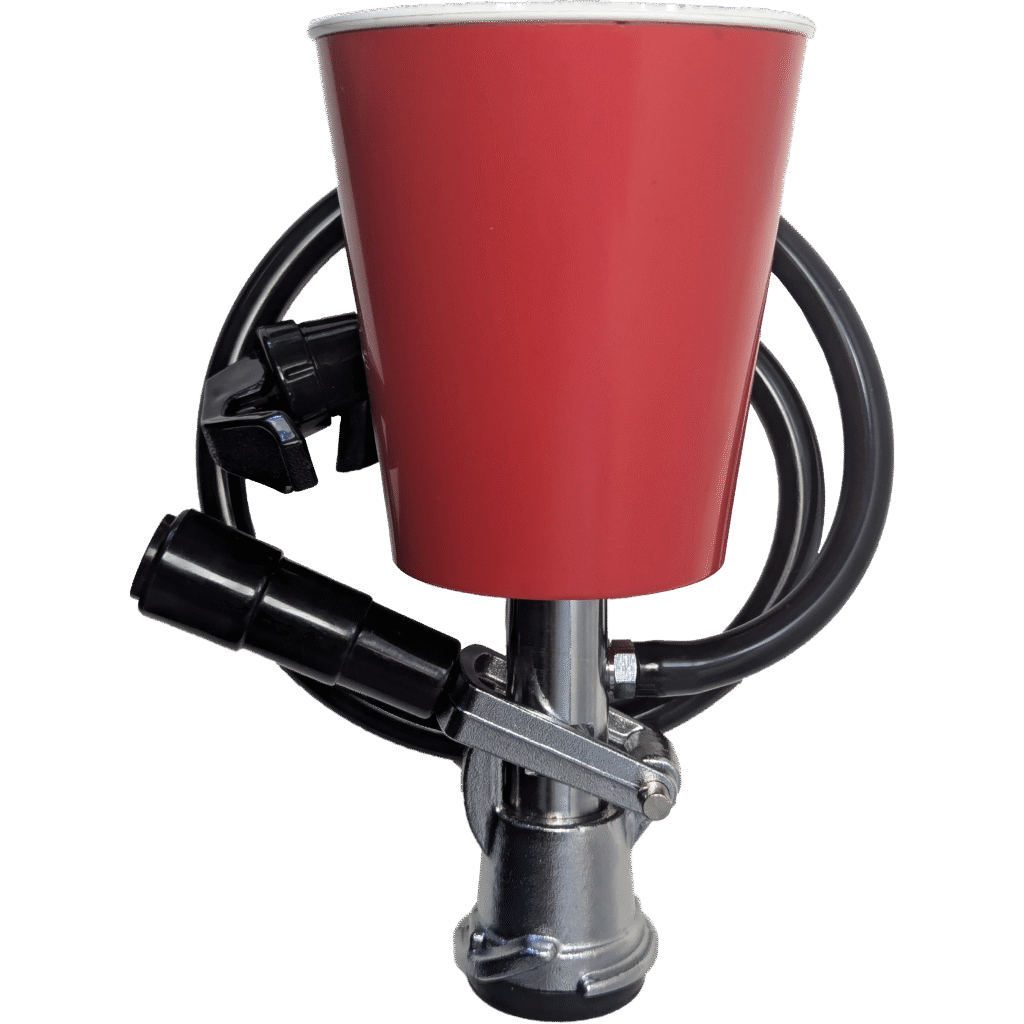
The Kegr — Electronic Keg Tap
Automatic pressure. No hand pumping. No CO2. Bluetooth app monitoring. Free shipping on all US orders.
$239.99$199.99 — Get the Kegr →