
| Quick Answer A general rule of thumb is one beer per person per hour. For a 4-hour party with 50 guests, that is roughly 200 beers, or just over one full half-barrel keg (which holds about 165 12-ounce servings). Round up rather than down, and size conservatively if you are using an air-pump tap since the keg should be finished the same day. |
Running out of beer at a party is a much worse outcome than having too much. But buying a second keg you will never finish is also wasteful, especially when any keg tapped with an air-pump tap should be consumed the same day. The math is simple once you know your guest count, event length, and a realistic estimate of how much people will drink.
The Formula
Start here:
- Estimate drinks per person per hour. For a casual party with moderate drinkers, use 1 beer per person per hour as your baseline. For a high-energy event or a crowd of heavy drinkers, use 1.5.
- Multiply by the number of guests who will actually drink beer. Not everyone at your event drinks, and not everyone who drinks will drink beer. Estimate realistically.
- Multiply by the number of hours the event runs.
- Divide by the number of servings in your keg size.
| Example 50 beer drinkers at a 4-hour backyard party at 1 beer per person per hour = 200 beers needed. A half-barrel keg holds roughly 165 12-ounce servings. You need approximately 1.2 kegs, so round up to 2 half-barrels or substitute one half-barrel and one quarter-barrel. |
Keg Sizes and Serving Counts
| Keg Type | Gallons | 12 oz Servings | 16 oz Pints |
| Half-barrel (full keg) | 15.5 | ~165 | ~124 |
| Quarter-barrel (pony keg) | 7.75 | ~82 | ~62 |
| Sixth-barrel (sixtel) | 5.16 | ~55 | ~41 |
| Slim quarter | 7.75 | ~82 | ~62 |
Quick Reference by Guest Count
| Beer Drinkers | 2-Hour Event | 4-Hour Event | 6-Hour Event |
| 20 people | 40 beers (1/2 pony) | 80 beers (1 pony) | 120 beers (1 half-barrel) |
| 30 people | 60 beers (1 pony) | 120 beers (1 half-barrel) | 180 beers (1 to 2 half-barrels) |
| 50 people | 100 beers (1 pony + 1 sixtel) | 200 beers (1 to 2 half-barrels) | 300 beers (2 half-barrels) |
| 75 people | 150 beers (1 half-barrel) | 300 beers (2 half-barrels) | 450 beers (3 half-barrels) |
| 100 people | 200 beers (1 to 2 half-barrels) | 400 beers (2 to 3 half-barrels) | 600 beers (4 half-barrels) |
These estimates assume one 12-ounce beer per person per hour. Adjust up by 25 to 50 percent for a younger, more energetic crowd or a longer pre-dinner cocktail hour.
Factors That Change Your Estimate
Type of event
A wedding reception where beer is one of several drink options needs far less keg volume than a tailgate where beer is the primary drink. If you are serving wine, cocktails, or liquor alongside the keg, reduce your beer estimate by 30 to 50 percent.
Time of day
Daytime events tend to run lighter than evening events. A 2 PM barbecue crowd drinks less per hour on average than the same crowd at a 7 PM backyard party.
Season and weather
Hot summer outdoor events drive higher consumption than cool fall gatherings. In heat above 85 degrees Fahrenheit, budget an extra 20 to 30 percent.
Your crowd
You know your guests better than any formula does. Adjust accordingly.
The Same-Day Consideration for Air-Pump Taps
If you are using a party pump or an electronic air tap like the Kegr, beer should be finished the same day you tap it. Once air enters the keg, oxidation begins and beer quality declines over the following hours.
This means your keg sizing strategy should lean toward finishing everything rather than having leftovers. If your math lands between a quarter-barrel and a half-barrel, think about whether your crowd will genuinely finish the larger size. If there is real uncertainty, the smaller keg is the better choice.
If you are using a CO2 system with a kegerator, this concern does not apply since CO2 keeps beer fresh for weeks.
What If You Run Out?
Having a backup plan is smarter than over-buying. Options if you run short:
- Pre-order a second keg from your retailer but ask if they will take it back unopened if not needed. Many distributors allow same-day returns on untapped kegs with the deposit.
- Have a case or two of canned beer on ice as a buffer. If the keg runs out, cans bridge the gap without waste.
- Know the nearest store that sells kegs and their hours, in case you need a same-day second run.
Frequently Asked Questions
How many beers are in a keg?
A standard half-barrel keg (the most common size) holds approximately 165 12-ounce servings. A quarter-barrel (pony keg) holds about 82 servings. A sixth-barrel holds about 55 servings.
Is it cheaper to buy a keg or cases of beer?
In most cases, a keg is significantly cheaper per ounce than buying cases of cans or bottles. A half-barrel of a major domestic brand works out to roughly $0.50 to $0.85 per 12-ounce serving versus $1.00 to $1.50 per can from a case. The larger your event, the bigger the savings.
Can I return an untapped keg?
Most beer distributors and liquor stores that sell kegs will accept returns of untapped kegs and refund your deposit. Some also refund part or all of the keg price depending on the store’s policy. Ask before you buy.
How far in advance should I order a keg?
For common domestic brands, a few days in advance is usually sufficient. For popular craft or specialty brands, order at least a week ahead since distributors may need to special order them. For large events requiring multiple kegs, two weeks is safer.
Does the keg need to be returned the same day?
Most distributors give you a few days to return the empty keg and equipment before charging a late fee or keeping the deposit. Confirm the return window with your retailer at the time of purchase.
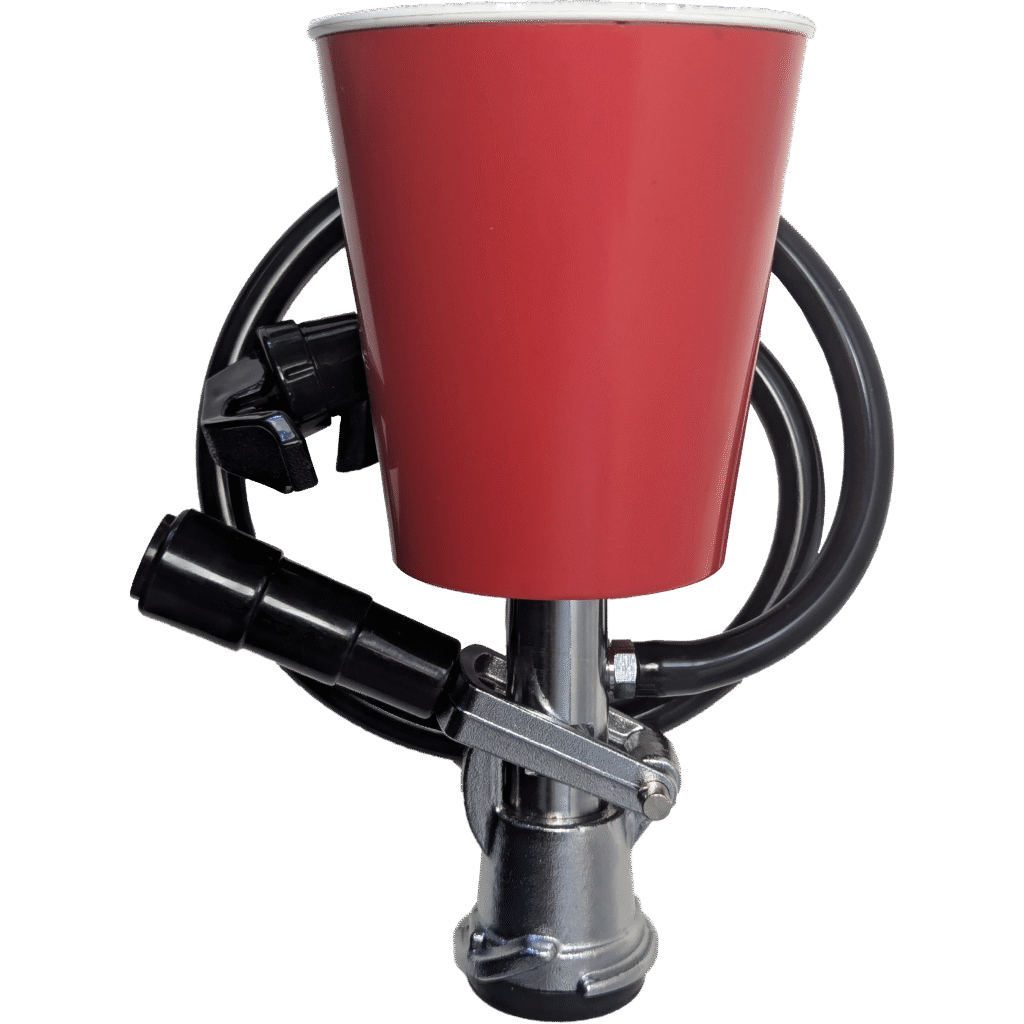
The Kegr — Electronic Keg Tap
Automatic pressure. No hand pumping. No CO2. Bluetooth app monitoring. Free shipping on all US orders.
$239.99$199.99 — Get the Kegr →