
| Quick Answer The most important factors when buying a keg tap are coupler compatibility (does it fit your keg?), pressure type (air pump vs CO2), portability, ease of use, and total cost including any ongoing expenses. For event and party use where the keg gets finished the same day, an electronic air tap like the Kegr offers the best balance of convenience and value at $199 with no recurring costs. |
Most people buy their first keg tap the day they need it, which means they pick whatever the beer distributor has or whatever ships in two days. A few minutes of upfront thinking saves you from ending up with the wrong tool for how you actually use it.
1. Coupler Compatibility
This is the non-negotiable first check. A keg tap connects to the keg through a coupler, and there are several coupler types in use around the world. The Sankey D is the standard for the vast majority of domestic US beers and most major imports sold in the United States, including Budweiser, Coors, Miller, Yuengling, Corona, Heineken, and Stella Artois.
Before buying any tap, confirm what coupler type your kegs will use. Most taps sold in the US target Sankey D and will say so on the packaging. If you plan to tap specialty imports, verify the coupler type with your distributor before purchasing.
| Confirm with your retailer. When you order a keg, tell the retailer what tap you have and ask them to confirm the keg uses the matching coupler. Takes 10 seconds and prevents a frustrating mismatch on the day of your event. |
2. Air Pump vs CO2: Know the Freshness Tradeoff
Every keg tap uses one of two methods to replace the beer volume as it is dispensed: air or CO2. This is the most consequential decision in choosing a tap because it determines how long your beer stays fresh.
- Air-pump taps (manual hand pumps and electronic taps like the Kegr) push atmospheric air into the keg. Air contains oxygen, which oxidizes beer and causes it to go flat and stale. Plan to finish any keg tapped with an air pump the same day.
- CO2 taps connect to a pressurized carbon dioxide tank. CO2 is chemically inert and does not affect beer, so the keg stays fresh for 30 to 90 days. The tradeoff is equipment: you need a tank, a regulator, and hose connections.
If you are using kegs for events where everything gets finished that day, an air-pump tap is the simpler and more affordable choice. If you want to stretch a keg over multiple days or weeks, you need CO2.
3. Manual vs Automatic Pressure
Within the air-pump category, you have a choice between manual and automatic:
- Manual hand pump: You pump a handle to build pressure before and between pours. Cheap, simple, and effective for casual use. Requires someone to actively manage the pump throughout the event, and pressure fluctuates with every round.
- Electronic tap (Kegr): A battery-powered internal pump monitors and maintains keg pressure automatically. No manual pumping required. Pressure stays stable from first pour to last. The Kegr companion app shows live pressure and keg level via Bluetooth.
Both types use air and have the same same-day freshness window. The electronic tap is the better experience at a busy event where consistent pour quality matters and nobody wants to be designated pumper all night.
4. Portability
If you are taking the tap to different locations, portability matters significantly.
- Hand pumps are very portable: compact, lightweight, no accessories needed.
- The Kegr is similarly portable: handheld size, battery powered, nothing to plug in. It travels easily to tailgates, venues, or outdoor events.
- CO2 systems are not portable in any practical sense. A CO2 tank, regulator, hose, and faucet assembly is a significant amount of gear, and CO2 tanks cannot be transported pressurized in most enclosed vehicles.
5. Total Cost of Ownership
The sticker price of the tap is only part of the cost picture. Think through the full cost over the number of times you plan to use it per year:
| Tap Type | Upfront Cost | Ongoing Cost | 5-Event Total | 10-Event Total |
| Manual hand pump | $20 to $50 | None | $20 to $50 | $20 to $50 |
| Kegr electronic tap | $199 | None (rechargeable) | $199 | $199 |
| CO2 starter kit | $150 to $400 | $15-$35 per refill | $225 to $575 | $300 to $750 |
| Rented tap (per event) | $10 to $30/event | Per event | $50 to $150 | $100 to $300 |
If you tap kegs more than a few times per year, owning a quality tap pays for itself quickly against rental costs. The Kegr’s break-even against a $20 rental tap is after roughly 10 events, and after that every event is effectively free.
6. Ease of Setup
How long and how much effort does setup actually take? This matters more than it sounds at an event where you have other things to manage.
- Hand pump: Under 1 minute. Attach, pump, pour.
- Kegr: Under 5 minutes. Attach coupler, power on, wait 30 seconds, pour.
- CO2 system: 15 to 30 minutes for first-time setup. Connect tank, attach regulator, connect hose, set pressure, check for leaks. Faster once you have done it a few times but never as fast as either air tap option.
What the Kegr Is Designed For
The Kegr is built specifically for people who tap kegs at events and parties and want a better experience than a hand pump without the cost and complexity of a CO2 system. It handles pressure automatically, pairs with a phone app via Bluetooth, works with any Sankey D keg regardless of size, and runs all day on a single charge with no recurring costs. It is not designed as a kegerator replacement or for permanent home bar setups where multi-day freshness is a requirement.
If you host a handful of keg events per year and want to show up with gear that works reliably without babysitting it, the Kegr at $199 is the right tool.
Frequently Asked Questions
What is the most important thing to check before buying a keg tap?
Coupler compatibility. Make sure the tap’s coupler matches the valve type on your keg. The Sankey D coupler covers most US domestic and major import kegs, but verify before purchasing, especially for craft or specialty brands.
Is a more expensive keg tap worth it?
It depends on how often you use it. A $25 hand pump is perfectly adequate for occasional use at small parties. If you host multiple events per year, an electronic tap like the Kegr at $199 pays for itself in convenience and consistent pour quality within a few events.
Can I use the same tap on multiple kegs?
Yes. A tap can be removed from one empty keg and attached to a new keg. Just remove the tap, attach it to the new keg’s valve, and you are ready to pour again. Clean the tap between kegs if possible.
Do I need to buy a tap or can I rent one?
Most beer distributors offer tap rentals for $10 to $30 per day. Renting makes sense if you tap kegs very rarely (once or twice a year). If you host events regularly, buying your own tap is more cost-effective and more convenient since you are not dependent on availability or return deadlines.
Does the Kegr work with any keg size?
Yes. The Kegr works with any keg that uses a standard Sankey D coupler, from a sixth-barrel sixtel all the way up to a full half-barrel. The coupler fit is what matters, not the keg size.
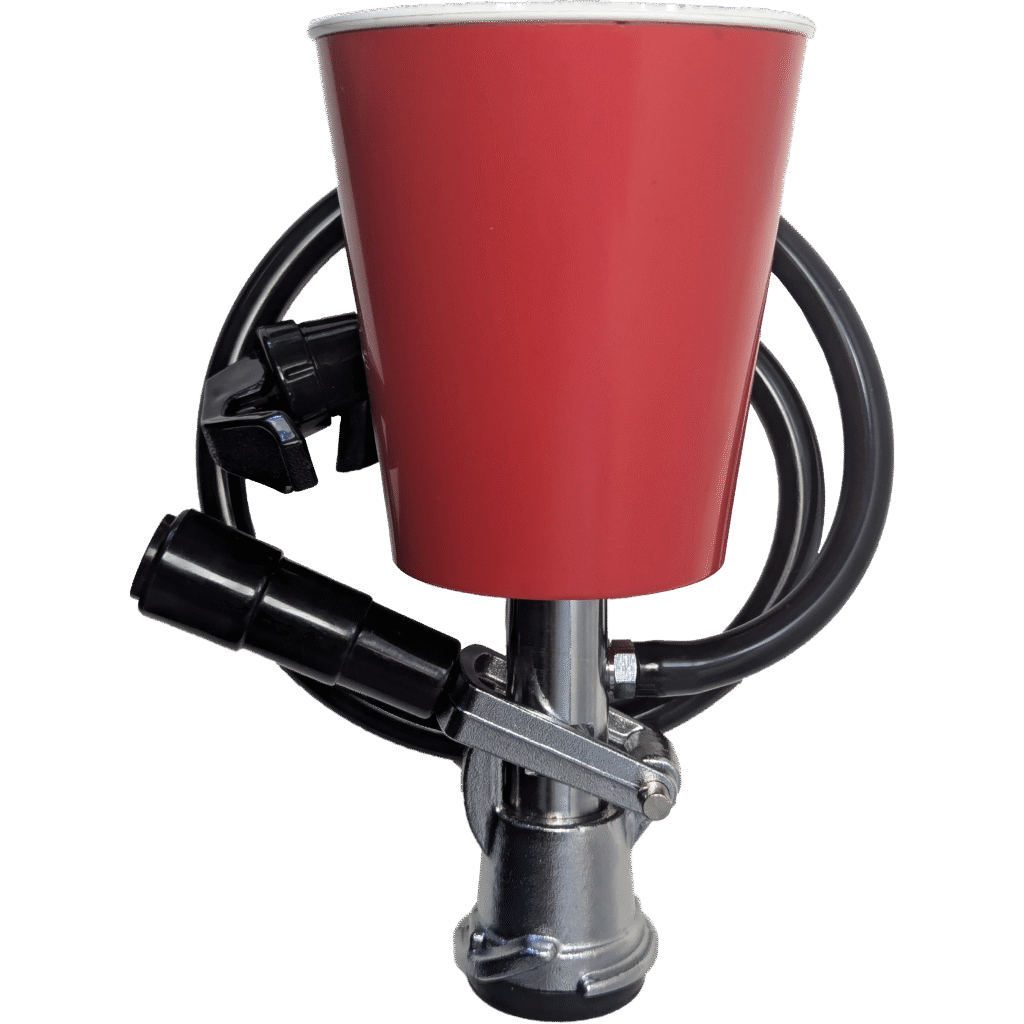
The Kegr — Electronic Keg Tap
Automatic pressure. No hand pumping. No CO2. Bluetooth app monitoring. Free shipping on all US orders.
$239.99$199.99 — Get the Kegr →