
| Quick Answer A party pump is a manual hand pump that attaches to a keg and uses air pressure to push beer out. You pump a handle before and between pours to build enough pressure for the beer to flow. Party pumps are inexpensive and simple to use, but because they introduce oxygen into the keg, the beer goes flat and stale within 12 to 24 hours. They are designed for events where the keg gets finished the same day. |
If you have ever been the person designated to pump a keg handle at a party while people wait with empty cups, you have used a party pump. It is the most common type of keg tap and the one most people encounter first. It works fine for its intended purpose, but it has real limitations that are worth understanding before you commit to one for an event.
How a Party Pump Works
A party pump has a handle, a probe that locks into the keg coupler, and an internal valve. When you press the handle down and push it in, air is forced from outside through the pump body and into the keg. This builds air pressure inside the keg, which pushes beer up through the dip tube and out through the tap line when you open the faucet.
To keep beer flowing, you have to keep pumping. As beer is dispensed, the pressure inside the keg drops. If you pump too little before opening the tap, the pour slows to a trickle or stops. If you pump too much, you get excessive foam. The right amount varies by keg temperature, fill level, and how long it has been since the last pumping round, which is why there is always some trial and error involved.
Why Party Pump Beer Goes Flat
The air a party pump pushes into the keg is ordinary atmospheric air, which is approximately 21 percent oxygen. Oxygen reacts with compounds in beer through a process called oxidation. The byproducts of oxidation produce a flat, stale, cardboard-like taste that gets worse with time.
This process starts the moment air enters the keg and cannot be stopped or reversed by refrigerating the keg after the fact. Beer that was poured from a freshly tapped keg at 7 PM will taste noticeably different at midnight and significantly worse the following morning. Plan to finish any keg tapped with a party pump the same day it is tapped.
| The same-day rule applies to all air-pump taps. Party pumps and electronic air taps like the Kegr both use air to pressurize the keg. Both have the same freshness window: best consumed the day you tap it. The difference between them is not how long the beer lasts but how easy the tap is to use throughout the event. |
Where Party Pumps Fall Short
For a small, casual gathering where one person can manage the pump and the keg gets finished in a few hours, a party pump is perfectly adequate. It starts to show its limits in these situations:
- Large events where the pump needs constant attention between rounds and no one wants that job
- Events with a long pour line or multiple people serving at once, where inconsistent pressure creates uneven pour quality
- Outdoor events in heat where the keg temperature is already a challenge and adding foam from over-pumping makes things worse
- Events where some beer will inevitably be left over, and you hoped to save it until the following day
How an Electronic Keg Tap Compares
An electronic keg tap like the Kegr works on the same fundamental principle as a party pump: it uses air to pressurize the keg. The difference is that the Kegr does this automatically with a battery-powered internal pump rather than requiring manual pumping.
The Kegr monitors pressure inside the keg in real time and replenishes it quietly as beer is dispensed. Pressure stays stable from the first pour to the last without anyone having to think about it. The companion app shows live keg pressure and remaining volume via Bluetooth so you always know where things stand.
| Factor | Party Pump | Kegr Electronic Tap |
| How it works | Manual air pumping | Automatic battery-powered air pump |
| Pressure consistency | Variable (depends on pumping) | Stable throughout event |
| Setup time | Under 1 minute | Under 5 minutes |
| Upfront cost | $20 to $50 | $199 |
| Ongoing cost | None | None (rechargeable) |
| Beer freshness | Same day | Same day |
| App monitoring | No | Yes (Bluetooth) |
| Designated pumper needed | Yes | No |
When a Party Pump Is the Right Choice
A party pump makes sense when:
- Budget is the only consideration and the keg will definitely be finished the same day
- The event is small and informal, with one person happy to manage the tap all night
- You already own one and it fits the event
When to Upgrade
An electronic tap is worth it when:
- You host multiple events per year and want consistent results without manual work
- You are serving a larger crowd where pour quality and speed matter
- You want Bluetooth monitoring to track what is left in the keg
- You want a better experience than a party pump without the cost and complexity of a CO2 system
At $199 with no ongoing costs, the Kegr pays for itself in convenience across a handful of events compared to the hassle of managing a manual pump at a busy party.
Frequently Asked Questions
What is the difference between a party pump and a keg tap?
A party pump is a type of keg tap specifically designed for manual air pumping. All party pumps are keg taps, but not all keg taps are party pumps. Other types include CO2 tap systems and electronic air taps like the Kegr.
Can you use a party pump on any keg?
Most party pumps are designed for Sankey D coupler kegs, which is the standard for most domestic US beers. Some pumps come with adapters for other coupler types. Check the coupler type on your keg before purchasing any tap.
How many times do you need to pump a party pump before pouring?
Typically 10 to 20 pumps before the first pour, then 3 to 5 pumps between rounds depending on how many beers were just poured. You will know the pressure is right when the beer flows smoothly without excessive foam at a 45-degree pour angle.
Does the Kegr work the same way as a party pump?
Yes, in terms of what goes into the keg. Both use air to maintain keg pressure. The Kegr automates the pumping process so pressure stays stable without any manual effort. Beer should be finished the same day with either tap.
What happens if you over-pump a party pump?
Over-pumping causes excessive air pressure in the keg. When you open the tap, that pressure pushes beer out too aggressively, causing it to foam heavily. You have to wait for pressure to bleed off naturally before pouring again, or open the pressure release valve on the top of the pump body if it has one.
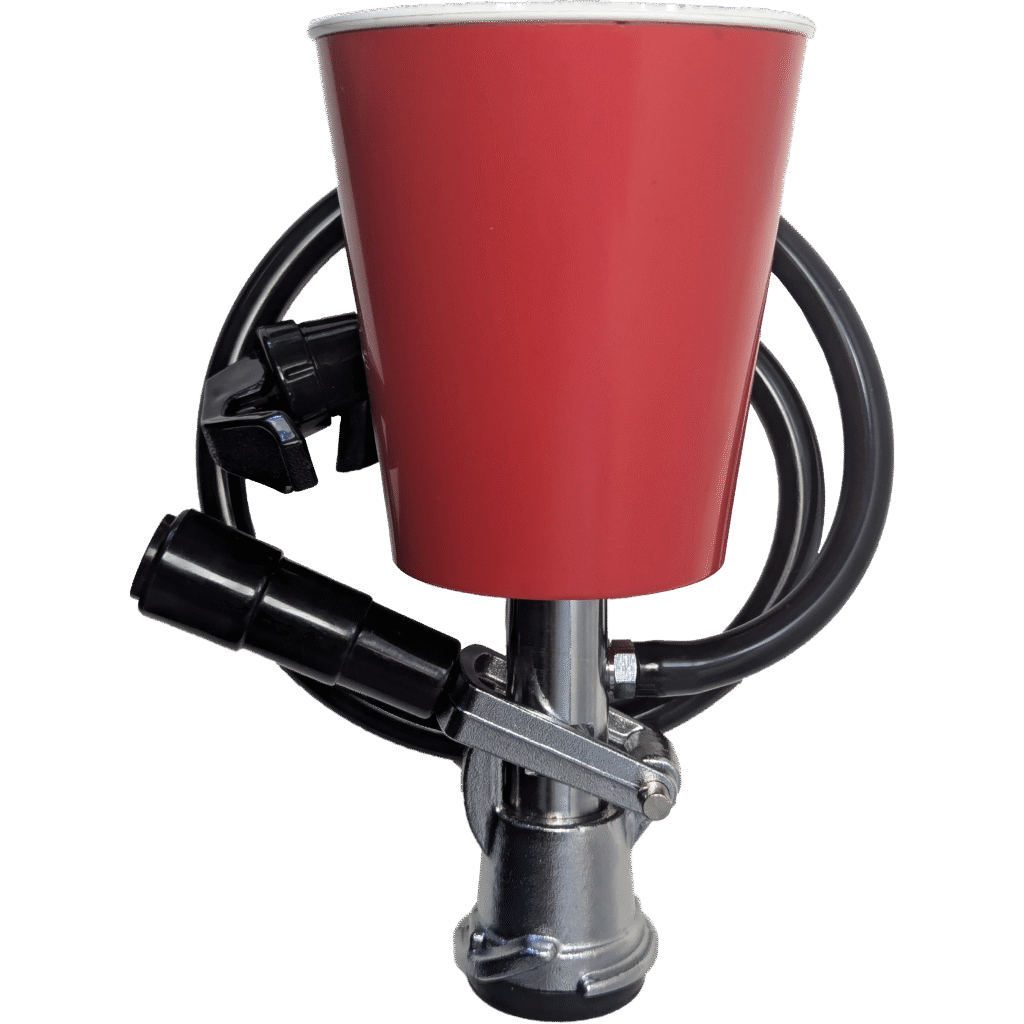
The Kegr — Electronic Keg Tap
Automatic pressure. No hand pumping. No CO2. Bluetooth app monitoring. Free shipping on all US orders.
$239.99$199.99 — Get the Kegr →